Beyond the Media Wall: 12 Unexpected Ways to Use Acoustic Panels Around the Home
Time to read 5 min
Time to read 5 min
When most people think of acoustic panels, they think of a media wall first. And while that is still one of the most popular ways to use them, it is far from the only option.
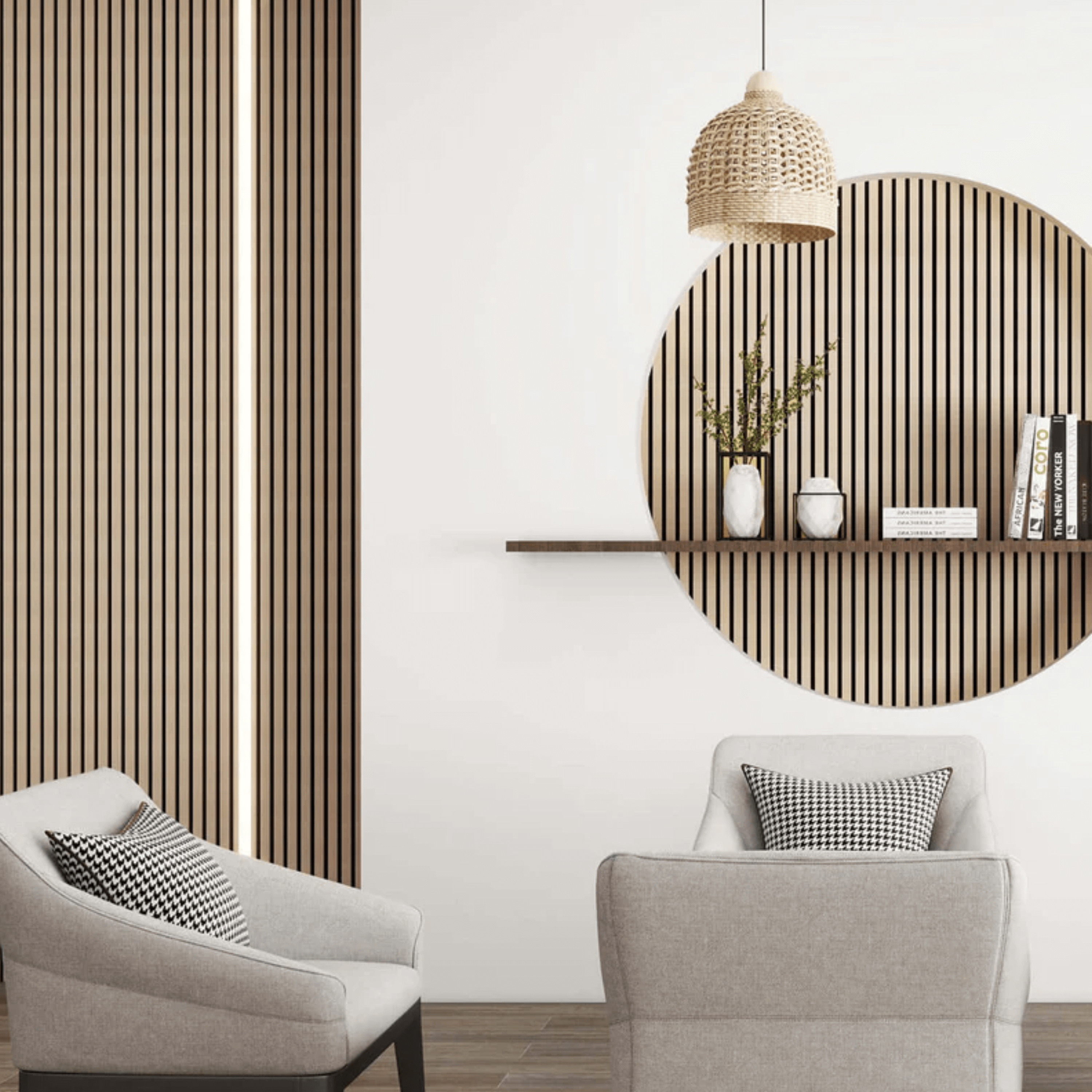
Acoustic panels can add warmth, texture and structure in spaces that often get overlooked. From staircases and alcoves to dining rooms, home bars and home offices, they can help plain walls feel more intentional and more design-led.
If you are looking for inspiration beyond the usual living room TV setup, here are 12 stylish ways to use acoustic panels around the home.
Under stairs spaces are often treated as dead space, but they can become one of the most interesting parts of the room. Acoustic panels work especially well here because they add detail and texture without making the area feel cluttered.
Whether you use them behind storage, across the full angle of the wall or as a backdrop for furniture, they instantly make the space feel more considered.
Hallways are often narrow, high traffic spaces, which means too much furniture or decoration can quickly make them feel crowded. Acoustic panels offer a cleaner solution.
A run of panels along one wall or around an entry section can add warmth and impact while keeping the space open and practical.
Staircases are one of the most overlooked areas in the home, yet they connect the whole layout. Acoustic panels can help turn them into a real design feature rather than just a functional route upstairs.
The vertical slatted design naturally draws the eye upward, helping stair areas feel taller, cleaner and more finished.
Dining rooms can sometimes feel flat if they are mostly table, chairs and painted walls. Acoustic panels bring texture and warmth without overwhelming the space.
Behind a dining table, sideboard or dining nook, they help the room feel more styled and more complete.
Alcoves are one of the best places to use acoustic panels because they create definition in a very natural way. Instead of filling every shelf with accessories, you can let the wall itself do more of the visual work.
Panels behind shelves, recessed storage or decorative niches instantly make those areas feel more custom and more intentional.
If you have a home bar or entertaining area, acoustic panels are an easy way to give it a higher-end finish. They work particularly well with darker cabinetry, warm lighting and black details.
Used behind the bar or across the front, they can make the whole setup feel more polished.
Fireplace walls already draw attention, so acoustic panels can help you make even more of them. Used around a chimney breast, on both sides of a decorative fireplace, or across the whole wall, they can create a more balanced built-in look.
This adds texture and warmth while keeping the space clean and contemporary.
Important: the fireplace shown here is decorative only. Acoustic panels should never be installed near direct heat sources, open flames or working fireplaces, as they are flammable.
Home offices often benefit from a little more structure, especially if you want the room to feel tidy and considered. Acoustic panels behind a desk work well, but wrapping them around a corner or recessed area can look even better.
That approach helps zone the workspace and gives the room a more complete finish.
You do not always need to panel a full wall to get the effect. Partial applications can be just as striking, especially in smaller rooms or spaces where you want to keep the overall look lighter.
This works well behind furniture, around fireplaces, under shelving or as a vertical section on a larger wall.
Bedrooms do not always need a full panelled wall behind the bed. Acoustic panels can also work on a side wall, around a chimney breast or as a framed feature that adds depth without repeating the same look seen everywhere else.
This gives the room warmth and texture in a way that still feels original.
In open plan layouts, acoustic panels can help visually zone different areas without adding partitions. A dining section, work corner or reading area can all feel more defined with a panelled backdrop.
That makes larger rooms feel more structured and easier to style.
Sometimes the smartest use for acoustic panels is simply where the room needs more presence. A blank wall behind a sideboard, an unused corner or a plain transition space can all become stronger focal points with the right finish.
That is what makes acoustic panels so versatile. They are not limited to one room type or one layout.
Natural oak and lighter tones help compact spaces feel brighter and more open.
Walnut and deeper shades work beautifully with black furniture, darker walls and moodier lighting.
Always consider your flooring, paint colour, furniture and metal finishes so the room feels balanced.
If you are looking beyond the standard media wall, some of the best places to start are:
These are all spaces where acoustic panels can add warmth, texture and definition without needing a full renovation.
Acoustic panels are no longer just for TV walls. They can help transform some of the most awkward, overlooked and underused spaces in the home into features that feel purposeful and well styled.
If you are planning a hallway refresh, a dining room update, an under stairs project or a smarter home office, acoustic panels can be one of the easiest ways to elevate the room.
Shop acoustic wall panels or order a sample to find the right finish for your space.