Kitchen Splashback Panels: How Solid Core Panels Work Best in Real Homes
Time to read 5 min
Time to read 5 min
A kitchen splashback needs to do more than fill the gap above a worktop. It has to handle splashes, sit comfortably with the cabinets and worktop, and still look considered once the kitchen is being used properly.
That is why wall panels work so well in this part of the home. They create a clean, wipeable surface and give the kitchen a more finished look without relying on lots of visual breaks.
For kitchens, the Solid Core Panel range is especially useful because the smaller pack sizes suit real splashback layouts far more naturally than oversized wall formats.
A splashback is one of the busiest surfaces in the room. It sits behind cooking, washing and food preparation, so the finish needs to feel practical as well as styled.
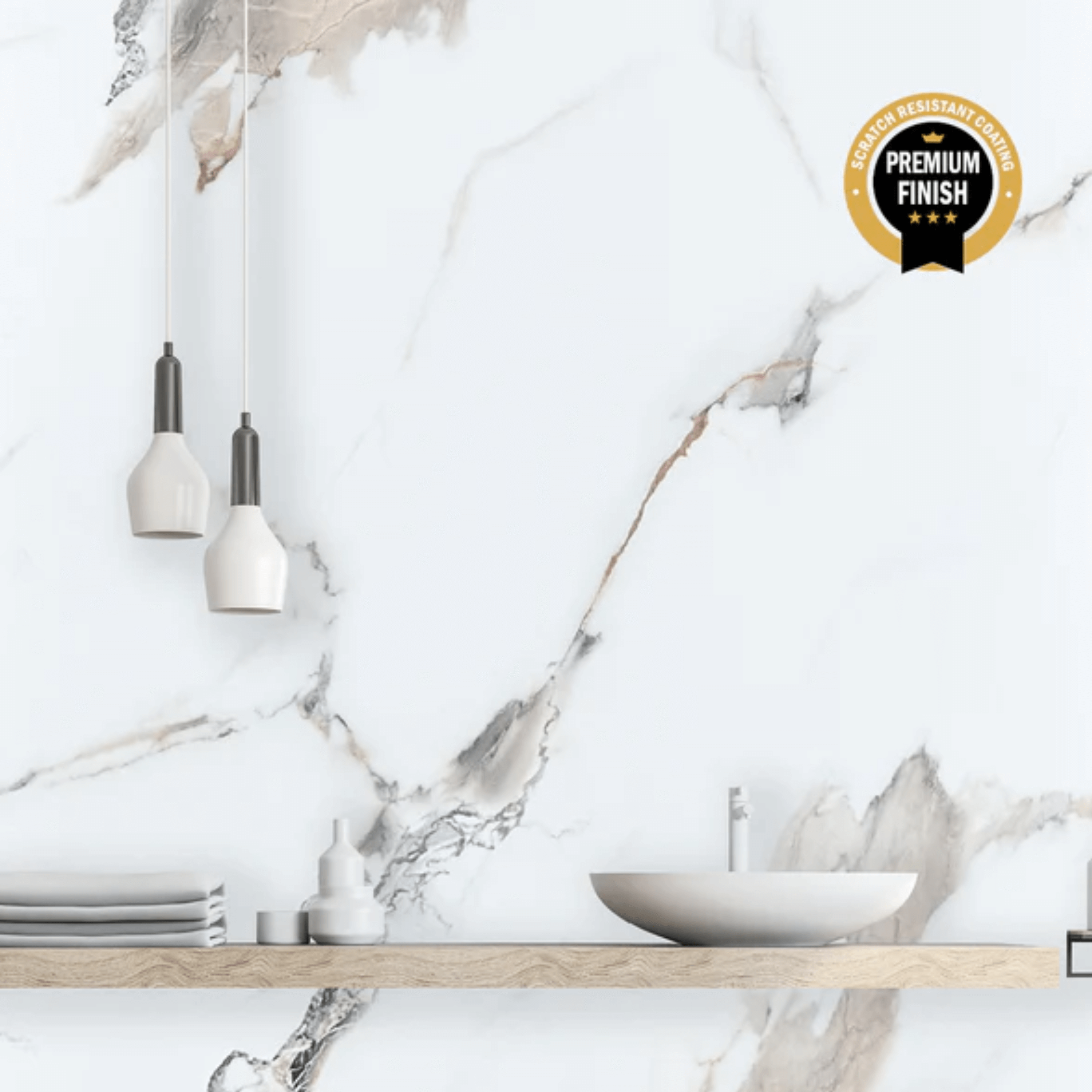
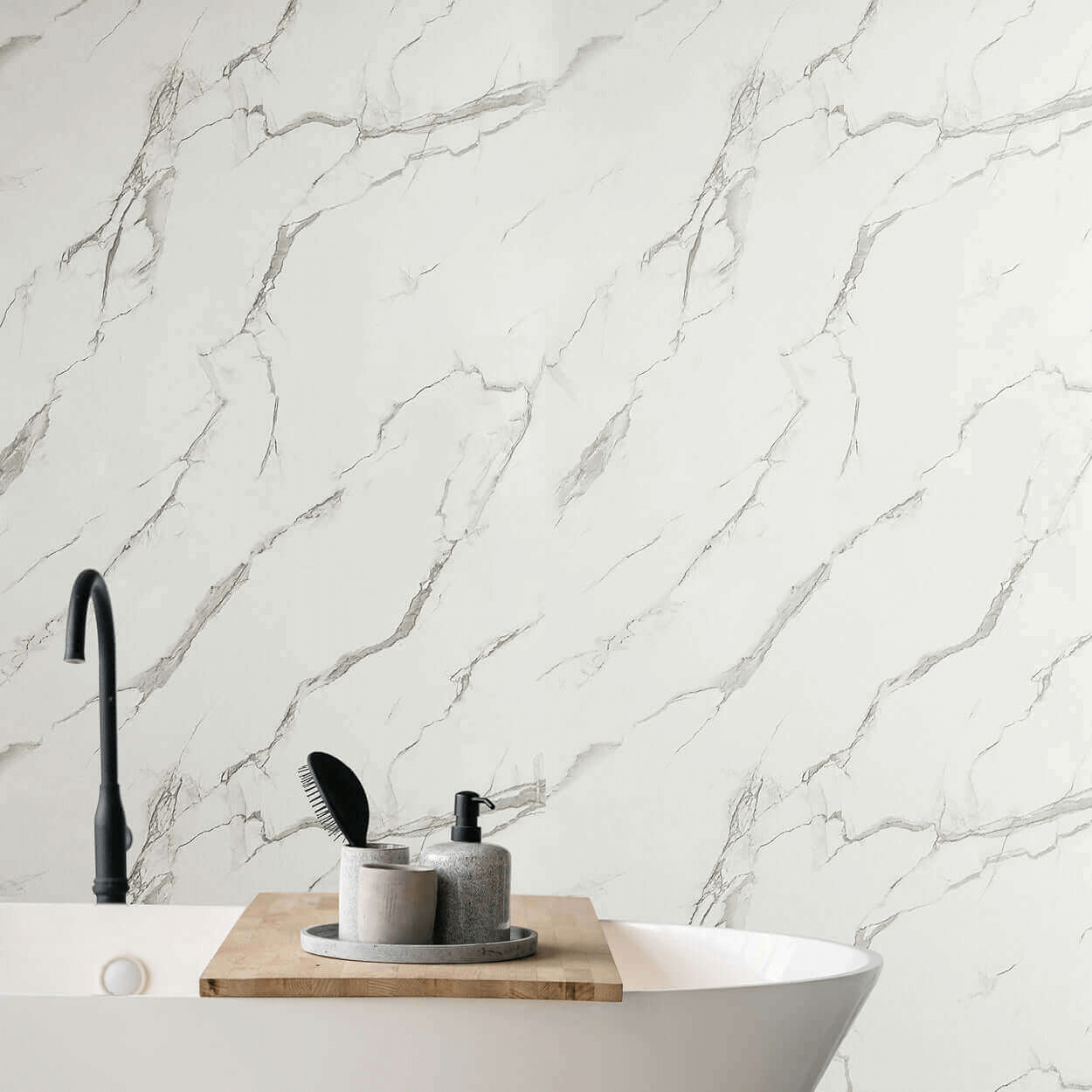
Our solid core panels work well here because they create a broad, easy-to-maintain surface that feels elegant yet practical. They also help the kitchen look more cohesive, especially when the splashback runs behind a sink, a hob or along a shorter section of worktop.
They have a 4mm solid core that makes them durable yet light. Perfect for areas of the house that require durability and a low profile.
See our Solid Core Panel range for more details!
Marble and stone designs are particularly strong in kitchens because they add a practical design without turning the splashback into a separate feature fighting with the rest of the room.
This is where the 4mm Solid Core Wall Panels range becomes especially useful.
Kitchen splashbacks are rarely one large empty wall. They are usually broken up by sockets, extractor areas, windows, shelving and shorter runs of worktop. That makes the smaller pack sizes much more practical.
These are a strong choice when you want a panel size that still feels substantial but is easier to handle across a standard splashback height.
They work well for:
These are the most flexible option in the range.
They work particularly well for:
These are best when you want more impact and less interruption, especially on taller sections or more feature-led areas.
They suit:
This is one of the most practical places to use a wall panel splashback. The wall behind the sink deals with constant splashes and often becomes one of the busiest visual points in the kitchen.
A softer marble or stone design works particularly well here because it adds texture while still sitting quietly behind taps, accessories and window details.
This is where the smaller formats prove their value. Kitchens often have broken wall space rather than one uninterrupted section, so more compact panel sizes make much more sense.
That is especially useful in family kitchens, utility-style spaces and older layouts where the splashback area is divided into smaller, more awkward sections.
This is where the splashback usually has a stronger visual role. A marble or deeper stone finish can work really well here, especially if the rest of the kitchen is more restrained.
The key is keeping enough balance around it. If the area already has extraction, shelving or darker cabinetry, the splashback should add structure rather than noise.
If you want the splashback to feel more architectural, a taller panel format can work extremely well. This suits larger kitchens, open shelving areas and statement walls where the finish needs more visual weight.
In these layouts, the splashback becomes part of the room design rather than just a practical strip above the worktop.
White kitchens usually benefit from a splashback that adds some depth without making the room feel cold.
The strongest directions are white marble, light grey marble and softer stone effects. These finishes keep the kitchen bright while giving the wall more shape.
Dark kitchens need contrast. A pale marble or a softer stone panel can lift the cabinetry and stop the room from feeling too heavy.
If you want a darker splashback in a dark kitchen, keep the worktop and surrounding finishes more controlled so the wall still feels clear.
Wood cabinetry already brings warmth, so the splashback should either support that warmth or sharpen it slightly.
Stone and lighter marble designs usually work best because they give enough contrast to stop the room feeling too same-tone while still sitting naturally with timber finishes.
These kitchens can handle stronger contrast and slightly deeper finishes.
Grey marble, black marble and granite-style gloss designs can all work here, but the strongest results still come from restraint. Let the splashback bring the wall finish without crowding the rest of the kitchen.
Both can work. The right choice depends on the overall feel of the kitchen.
Gloss is often the stronger option when:
Matt is often the stronger option when:
That is why the stone-led matt options in the Solid Core range are so useful. They give the wall depth and texture without making the kitchen feel too cold or too polished.
The weak move is trying to make the splashback do everything.
A marble or stone panel already brings movement, texture and finish to the wall. Once that is in place, the rest of the kitchen usually works best when it stays controlled. Let the cabinets, worktops and fittings support the splashback instead of competing with it.
That is what makes the room feel more considered.
If you want to explore finishing details around edges and transitions, this is also a natural place to link to How Trims Complete Wall Panel Installations: A Guide on Complimentary Trims.
If you want a kitchen splashback that feels practical, clean and easy to style, the Solid Core Panel range is one of the strongest places to start.
The smaller pack sizes are especially useful for real kitchen layouts, where wall space is often broken up and flexibility matters. Whether you want a pale marble behind the sink, a deeper finish behind the hob or a softer stone look across a utility run, these panels make it easier to create a splashback that fits the kitchen properly.
For smaller and medium splashback areas, the strongest options to focus on are:
These are the formats that feel most natural for kitchens and the easiest to build into a splashback layout that looks clean, balanced and intentional.