The Best Bathroom Panel and Floor Pairings: 7 Combinations That Look More Considered
Time to read 7 min
Time to read 7 min
The strongest bathrooms are not built around one finish.
What makes a scheme feel more considered is the relationship between the wall and the floor. Tone, contrast, scale and texture shape the room far more than people realise. A marble wall can feel crisp, warm, dramatic or flat depending on what sits beneath it. The same goes for stone effects, concrete tones and softer neutrals.
This is where bathroom planning often falls apart. The wall panel gets all the attention, then the floor is chosen afterwards as if it is a separate job. That is how bathrooms end up feeling disconnected, too busy or visually heavy.
If you are choosing bathroom wall panels and SPC flooring together, these are the combinations worth starting with.
Bathroom wall panels usually dominate the visual space. The floor does something different. It grounds the room, controls contrast and decides whether the final scheme feels calm, bold, warm or sharp.
That means the floor should not compete with the wall unless that tension is intentional. Some pairings work because both finishes stay quiet. Others work because one leads and the other supports. The strongest bathrooms usually get that balance right.
If you are still comparing surface styles, read our guide to Choosing the Right Finish for Your Bathroom.
This is one of the safest and strongest bathroom combinations because it keeps the room bright without looking stark.
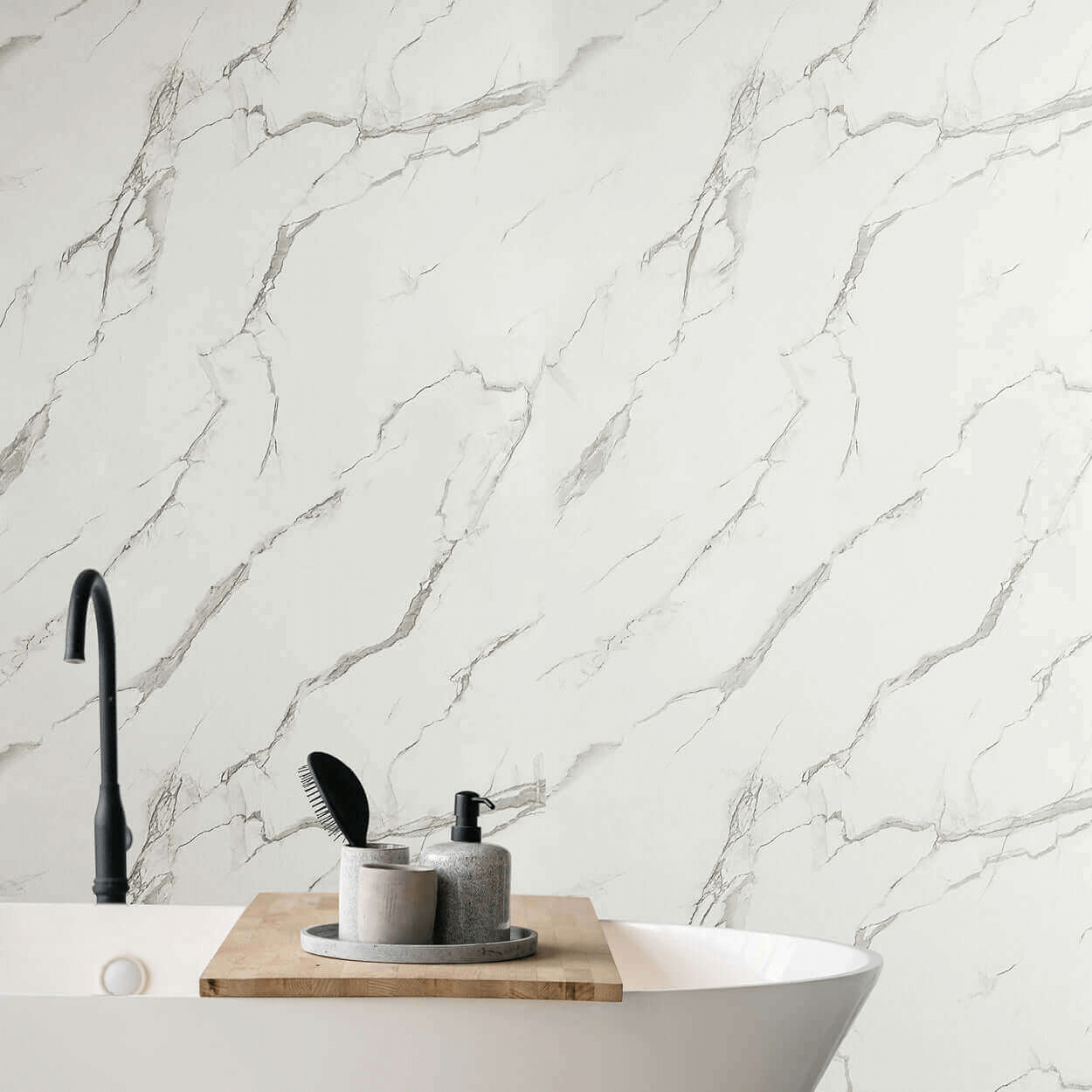
White marble wall panels already bring enough movement through the veining, so the floor should stay light and settled. A pale marble-effect SPC floor keeps everything clean, airy and visually open. It works especially well in bathrooms where you want the finish to feel polished but not cold.
This pairing suits en suites, family bathrooms and shower rooms because it is easy to style and does not date quickly. Chrome, brushed brass and matte black can all work here depending on the rest of the scheme.
What makes this pairing work
The wall brings the main pattern
The floor keeps the look light and calm
The contrast stays soft and easy to live with
When the wall has real drama, the floor needs discipline.
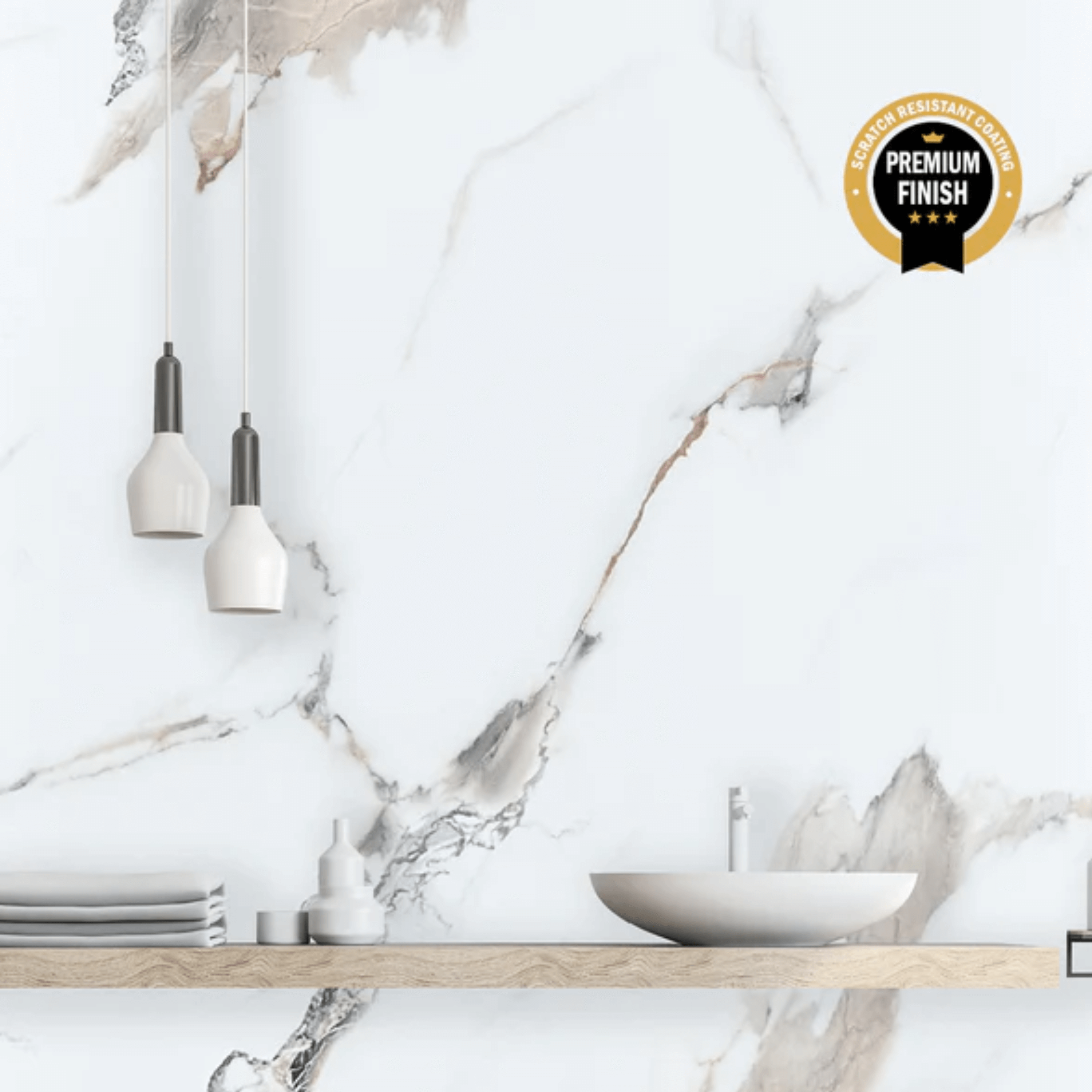
Blue and gold marble panels already carry colour, contrast and movement. Trying to pair them with another bold surface is where things go wrong. A soft grey SPC floor gives the wall space to lead and keeps the room feeling controlled rather than overloaded.
This is the kind of combination that suits more luxurious bathrooms, especially when finished with brushed brass details, warm lighting and simpler sanitaryware. The wall does the heavy lifting. The floor keeps the scheme balanced.
What makes this pairing work
The wall becomes the feature
The floor gives the room breathing space
The overall scheme feels styled, not forced
This pairing works when the wall stays broad and quiet while the floor adds the decorative detail.
Grey stone and concrete-effect bathroom panels are flatter and more architectural, so they can take a floor with a bit more visual interest. That is where a marble-effect SPC floor can come in well, especially if the wall finish is restrained and the rest of the room stays simple.
The trick is not to make both surfaces fight for attention. If the wall is calm, the floor can carry more identity. That gives the room energy without making it feel cluttered.
What makes this pairing work
The wall keeps the room calm
The floor adds movement and contrast
The scheme feels more layered and intentional
Some marble bathrooms want to feel softer and warmer, not sharper and cooler.
If the panel has warmer veining or a creamier base, a wood effect SPC floor helps carry that warmth across the room. It softens the harder edges of marble and makes the whole scheme feel more relaxed. This is a strong route for bathrooms that want to feel calm and styled without becoming too minimal.
Mid-oak and natural timber tones tend to work particularly well here. They add warmth without dragging the room into a rustic look.
What makes this pairing work
The wall still feels polished
The floor introduces warmth and softness
The room feels balanced rather than clinical
This is the kind of scheme that can look sleek or dead depending on execution.
Grey wall panels with grey SPC flooring can work extremely well, but only when there is enough difference in tone, surface or scale. If both finishes are too similar, the room loses shape. If one is smoother and the other has more texture or variation, the result feels much more resolved.
This is a strong choice for contemporary bathrooms where you want very little visual noise. It also gives black, chrome or brass fittings more room to stand out.
If you want a more trend-led view of where modern bathrooms are moving, this is a good place to link to Bathroom Trends for 2026.
What makes this pairing work
The palette stays cohesive
The variation comes from texture, not colour
The fittings have room to do more visually
This is one of the strongest ways to stop a dramatic wall from feeling too cold or too formal.
A statement marble wall with deep movement or richer veining already has a lot going on. Pairing it with another stone or marble floor can make the room feel overworked. Oak effect SPC flooring solves that fast. It introduces warmth, softens the scheme and gives the eye a cleaner break between surfaces.
This is a useful combination when you want the wall to feel luxurious but the room still needs to feel liveable.
What makes this pairing work
The wall keeps its impact
The floor softens the scheme
The room feels warmer and more relaxed
Not every bathroom needs a high-contrast marble-and-metal look.
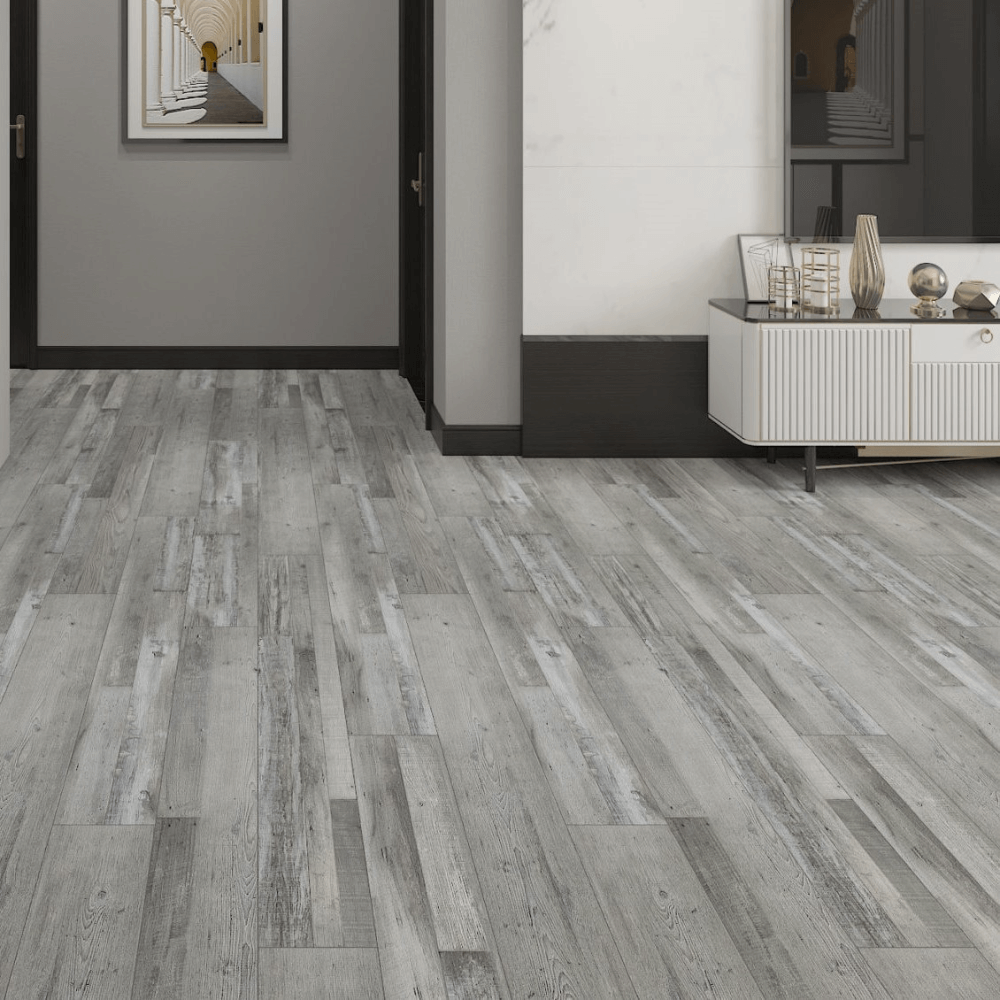
Softer stone and neutral panel finishes work well when the goal is calm, simplicity and a less showy result. Pairing them with a gentle grey oak SPC floor keeps that softness going while giving the room enough texture to avoid looking flat.
This suits bathrooms where you want a more natural and understated feel. It also gives you flexibility with brushed brass, black or chrome depending on the rest of the room.
What makes this pairing work
The wall keeps the room soft
The floor adds texture without weight
The scheme feels settled and understated
A bathroom does not need every surface to sit in the same tone family.
That is often where schemes lose definition. If the wall panels, floor, vanity and trims all sit too close together, the room starts to blur. What usually makes a bathroom feel more considered is controlled contrast.
That might mean pale walls with a deeper floor, dramatic walls with a quieter floor, or cooler panels with warmer flooring. The point is not to create contrast everywhere. It is to give the room structure.
This matters even more with marble effects because the veining already adds movement. If every other finish tries to copy that same language, the room can start to feel unsettled.
Keep these points in mind
Let one surface lead
Use the second surface to support it
Bring contrast through tone, scale or texture
Do not force pattern into both surfaces at once
Once the wall and floor pairing is right, the rest of the bathroom becomes much easier to resolve.
Trim colour, shower frame, mirror shape, vanity finish and lighting all matter, but they work hardest when the main surfaces already feel balanced. That is why choosing the wall and floor as a pair makes such a difference.
If the wall is doing more, the floor should usually calm the room down. If the wall is quieter, the floor can carry a little more texture or identity. If both are subtle, then the fittings or lighting need to bring the definition.
That is usually the difference between a bathroom that feels finished and one that feels like separate choices placed next to each other.
The strongest bathroom schemes do not happen by accident.
They come from knowing which finish should lead, which one should support, and how the two surfaces shape the room together. White marble with pale marble-effect flooring, statement marble with oak, or soft stone with grey oak can all work brilliantly when the pairing feels balanced.
If you are planning a bathroom update, choose the wall and floor together from the start. That is what gives the space a more considered finish before the rest of the room even goes in.