Acoustic Panels in Dining Rooms: How to Add Warmth Without Making the Space Feel Dark
Time to read 4 min
Time to read 4 min
Dining rooms can feel flat or unfinished when the walls are too plain. Acoustic panels add texture, rhythm and warmth, but the result depends on how they are used.
The mistake is using them too heavily, choosing a finish that is too dark, or forgetting the room still needs to feel open. Used well, acoustic panels can make a dining room feel calmer, more architectural and more considered.
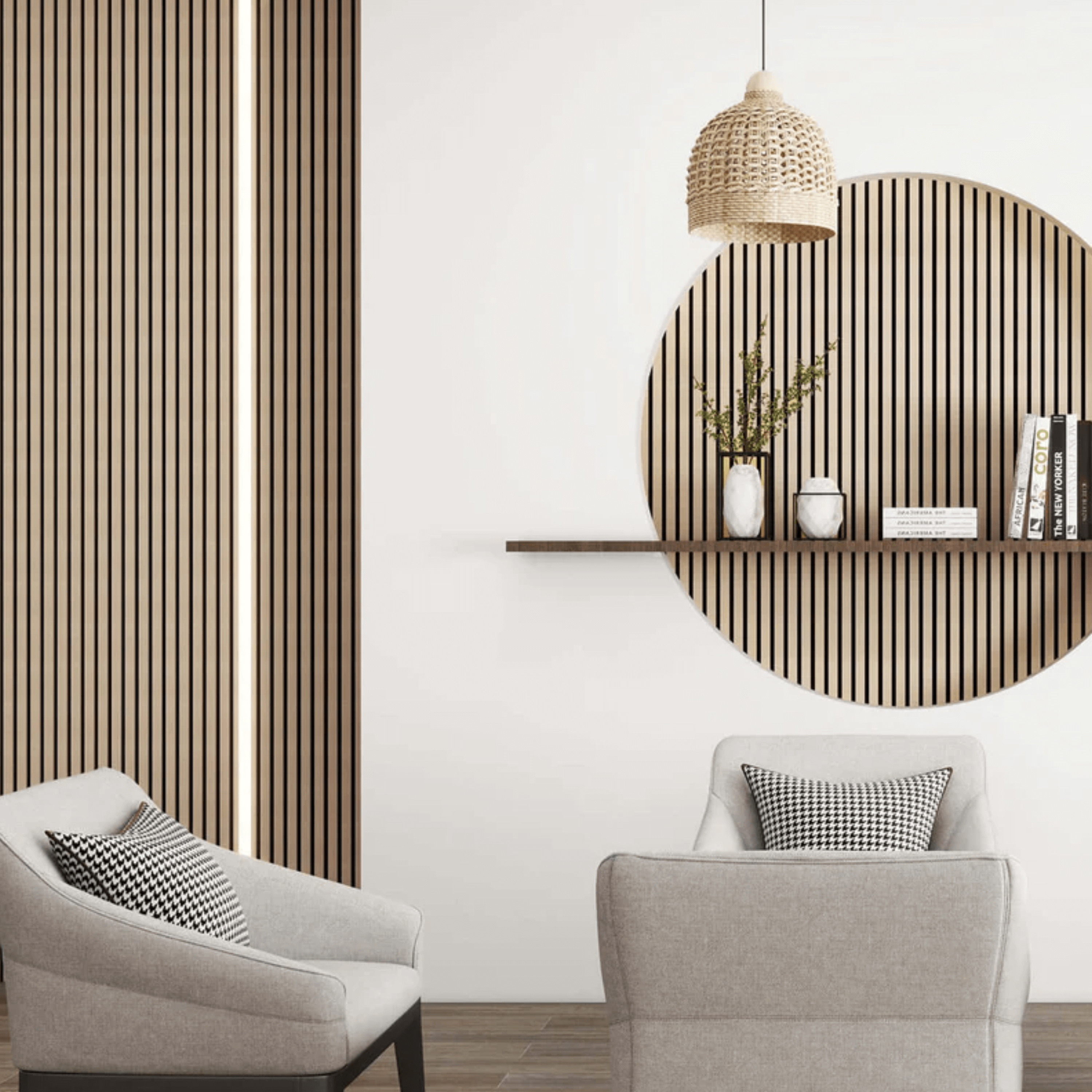
Dining rooms benefit from materials that add warmth without clutter. Acoustic panels do exactly that. The vertical slatted detail brings structure to the wall, helps define the dining area and adds presence without relying on busy pattern.
They work particularly well in open-plan spaces, dining nooks and dedicated dining rooms where you want the area to feel relaxed and styled.
The most effective place to use acoustic panels is usually the wall behind the table. It gives the room a focal point and helps the dining area feel anchored.
Natural Oak works especially well here because it adds contrast against pale walls without making the room feel darker. A full panelled backdrop can make even a simple dining set feel more intentional.
It frames the table naturally, adds texture where the room needs it most and creates a feature without taking over the whole room.
Acoustic panels can be even more effective when they continue across two walls. That extra coverage gives the nook more shape, helps zone the area and makes a small dining corner feel more settled.
This works particularly well when the panels stay on the lower part of the wall and the upper section is kept lighter. That balance adds warmth without making the nook feel boxed in.
Use acoustic panels to define the nook, then offset them with lighter walls, simple upholstery and enough clear space around the table.
Bench seating and acoustic panels naturally create a more built-in look. Together, they make the dining area feel more planned and less temporary.
White Ash is especially strong here. It keeps the slatted effect but feels lighter, which helps the wall stay clean and bright behind a bench area. Natural Oak also works well if you want a warmer result. Darker walnut-style finishes need more daylight and a tighter palette.
If you like this more tailored approach, read How to Make Acoustic Panels Look Built-In: Ideas for Alcoves, Shelving, Fireplaces and Fitted Furniture
It keeps the wall light, gives the seating area more shape and adds texture without too much visual weight.
Lighting changes how acoustic panels feel. Under warm lighting, the slats gain depth, the finish feels richer and the dining area becomes more inviting.
This matters even more with Natural Oak and darker walnut-style tones, because light is what stops them from feeling too heavy. Warm LEDs, pendant lighting or softer wall lighting can all help. White Ash also benefits from warm lighting, which keeps it soft rather than flat.
Let the main light shape the table, then use softer surrounding light to keep the wall finish warm and balanced.
The answer is balance. If the panel finish is deeper, keep more of the room pale. If the dining chairs are black, soften the scheme with an oak table, lighter flooring or neutral walls. If the panelling covers a larger area, avoid adding too many other dark elements.
White Ash gives you the slatted look in a lighter form. Natural Oak sits in the middle and is often the easiest to style. Darker walnut-style tones can look rich and elegant, but they need more natural light or stronger contrast around them.
Lighter walls, simple flooring, warm lighting, clear sightlines and enough contrast between the panels and the furniture.
If you are planning the finishing details around your panelled wall, read How Trims Complete Wall Panel Installations: A Guide on Complimentary Trims
Acoustic panels can make a dining room feel warmer, more defined and more intentional when they are used with control.
A full wall behind the table, a wraparound nook or a bench seating backdrop can all work beautifully. Natural Oak is often the easiest finish to build around. White Ash is ideal when you want texture without too much weight. Walnut-style darker tones can create a richer look when the room has enough balance around them.