How to Use Bold Shower Panels Without Overwhelming the Bathroom
Time to read 4 min
Time to read 4 min
Bold shower panels can completely change the feel of a bathroom.
Deep colours, dark finishes and dramatic marble patterns create a strong focal point, but they can also feel difficult to use if you are working with a smaller room.
The answer is not to avoid statement panels. It is to give them enough space to stand out. By balancing the design with simpler surfaces, coordinated fittings and a clear colour palette, you can create a bathroom that feels confident rather than crowded.
Explore our bathroom and shower wall panels to compare bold colours, dark finishes and marble-inspired designs.
A statement panel works particularly well when it has a clear role within the room.
Using the strongest design inside the shower enclosure creates one defined focal point. The eye is naturally drawn towards it, while the rest of the bathroom can remain calmer.
This approach suits:
You do not need to repeat the same bold pattern across every wall. In many bathrooms, one carefully chosen section creates more impact than full-room coverage.
Think about what you want people to notice first. If the answer is the shower, let that area carry the strongest colour or pattern.
White sanitaryware gives a bold wall design room to breathe.
A white bath, basin, toilet or shower tray creates a clean break between stronger surfaces. It also helps the bathroom feel bright, even when the main panel is dark or heavily patterned.
This combination works especially well with:
You can still add warmth through furniture, towels and accessories. The white fixtures simply provide a calm base that keeps the room feeling balanced.
A bold shower panel does not need competition.
Painted walls in white, cream, soft grey or warm beige can soften the overall scheme and make the feature area feel more deliberate.
Neutral walls are particularly useful when the panel includes several colours or a large-scale pattern. They allow the design to stand out without making every surface demand attention.
Use the room’s natural boundaries to decide where the panels should stop. A shower screen, internal corner, vanity unit or doorway can all create a clear end point.
The result should feel intentional rather than unfinished.
Flooring has a strong effect on how heavy or open a bathroom feels.
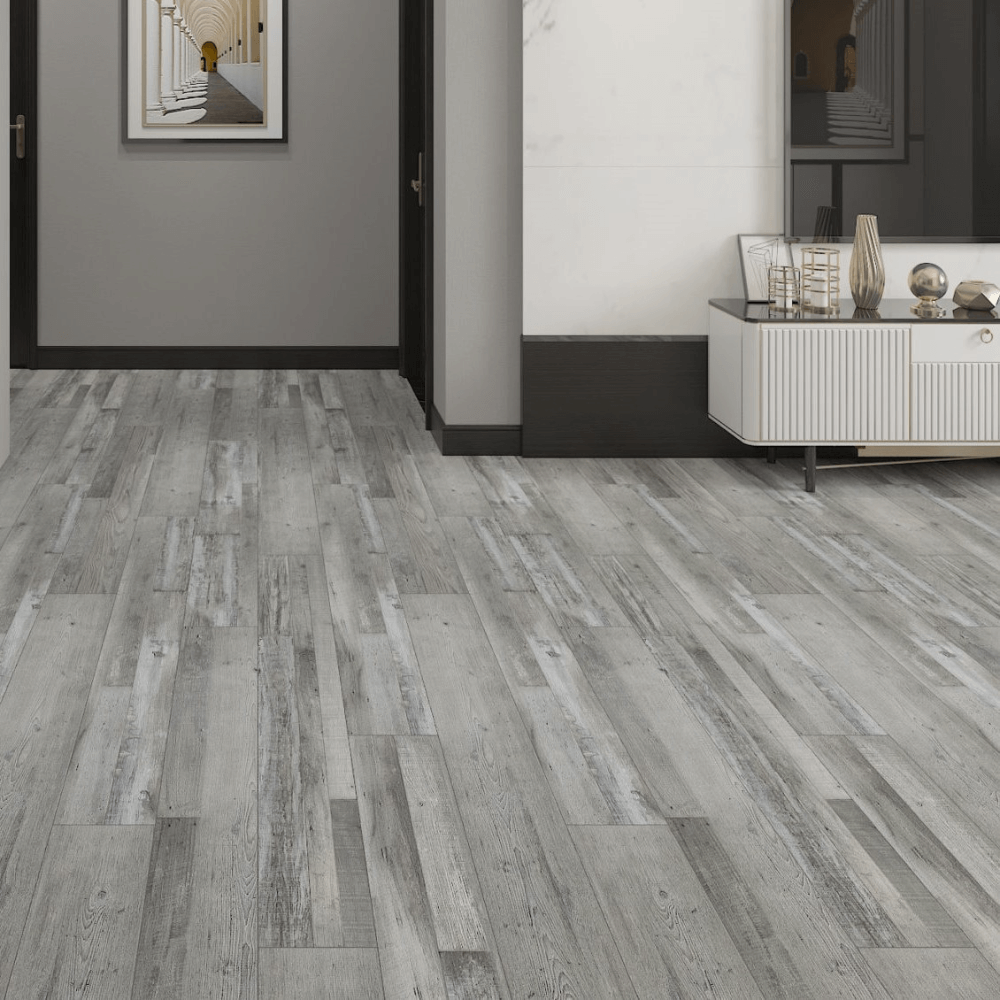
When using dark shower panels, a lighter floor can help lift the room. Pale stone, light grey, soft wood tones and simple neutral patterns all work well.
This does not mean the floor has to be plain. A subtle pattern can add character, provided it does not compete with the wall.
If both the panels and flooring are highly detailed, the bathroom may start to feel busy. Choose which surface will lead the design, then let the other play a supporting role.
For a dark feature wall, lighter flooring often creates the clearest balance.
Your taps, shower controls, screen frames and accessories can either blend into the scheme or add contrast.
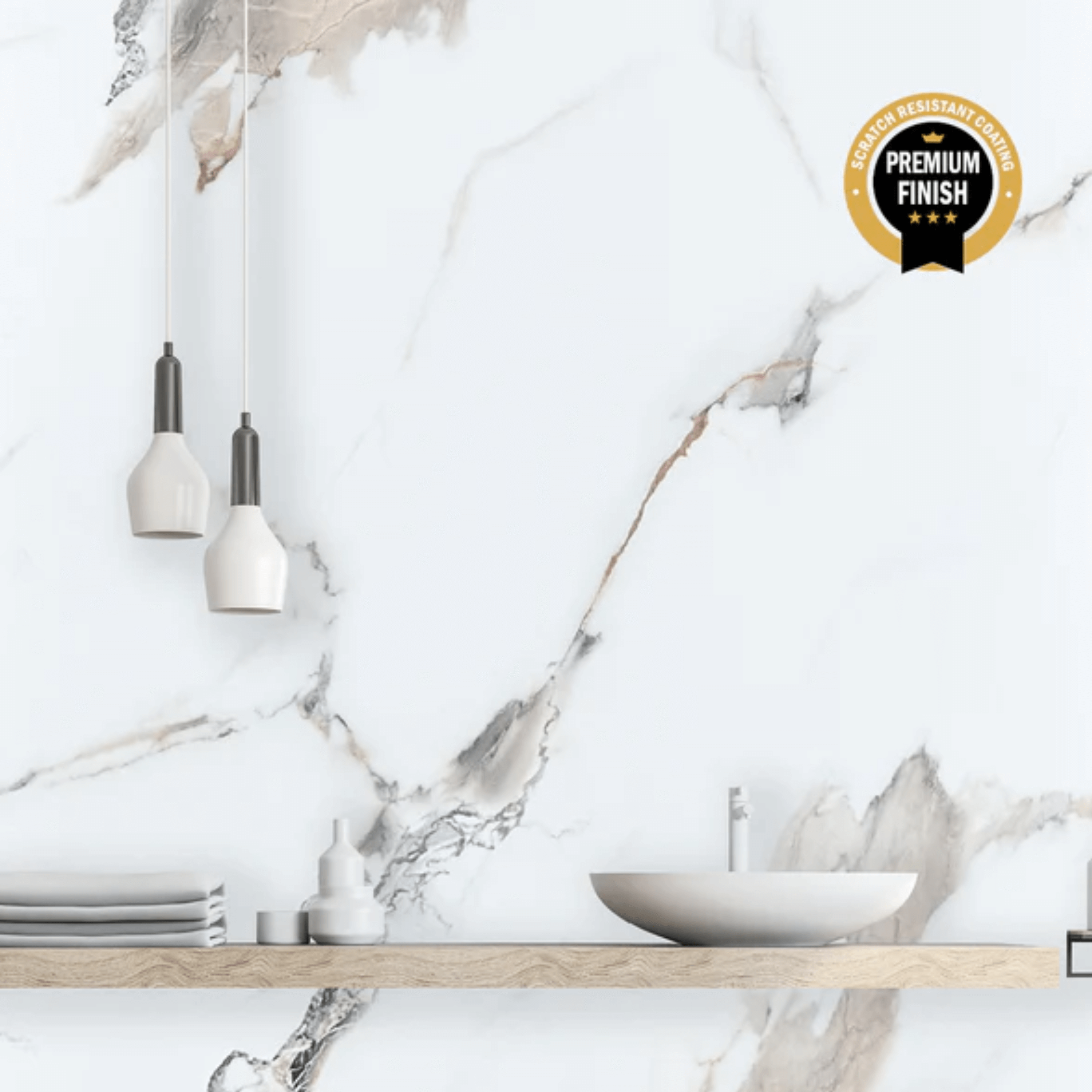
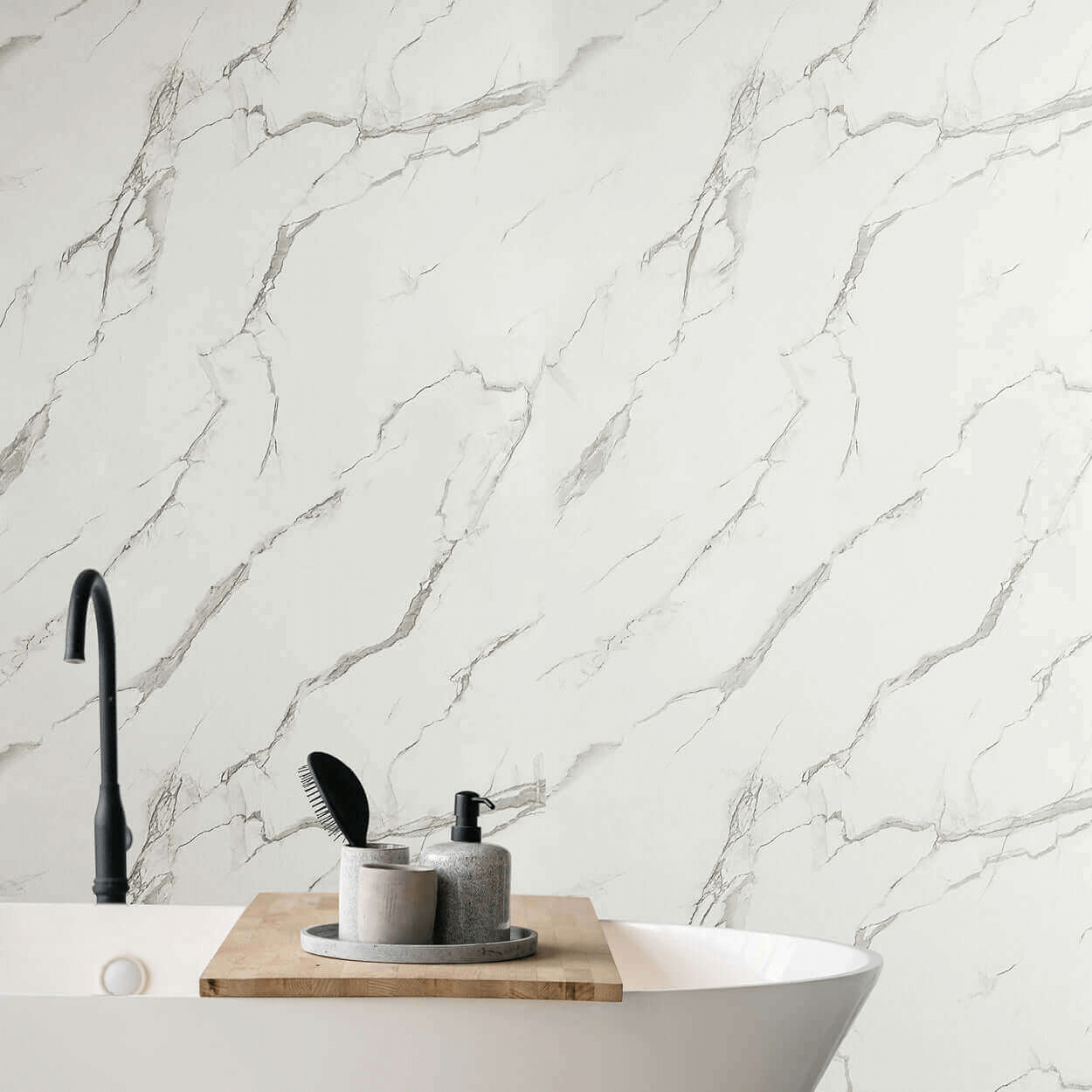
Black taps and shower frames work well with dark panels, blue finishes and pale marble designs with grey or black veining. They create clear, modern lines and can help connect separate areas of the bathroom.
Chrome is a versatile choice for bold panels because it reflects light without adding another strong colour.
It works particularly well in smaller bathrooms or with highly patterned marble designs.
Warm metallic finishes suit panels with gold, beige, brown or warm grey details.
They can also soften a dark design and give the bathroom a warmer feel.
Whichever finish you choose, repeat it across the main fittings. Using one metal consistently will make the room feel more coordinated.
A bold bathroom still needs a clear visual order.
If the shower panel has dramatic veining, keep the flooring, furniture and accessories simpler. If the floor carries a strong geometric pattern, choose a panel with a more controlled design.
Try to avoid combining several large patterns in one small room.
Instead, build the scheme around one main feature and support it with:
This allows the bold panel to remain the focus without making the bathroom feel too full.
A small repeat of the main panel can help connect the bathroom.
You could use the same finish:
The repeat does not need to be large. Even a small section behind the basin can make the shower and vanity areas feel part of the same design.
This works particularly well when most of the surrounding walls remain painted.
Bold panels can look very different depending on the bathroom’s lighting.
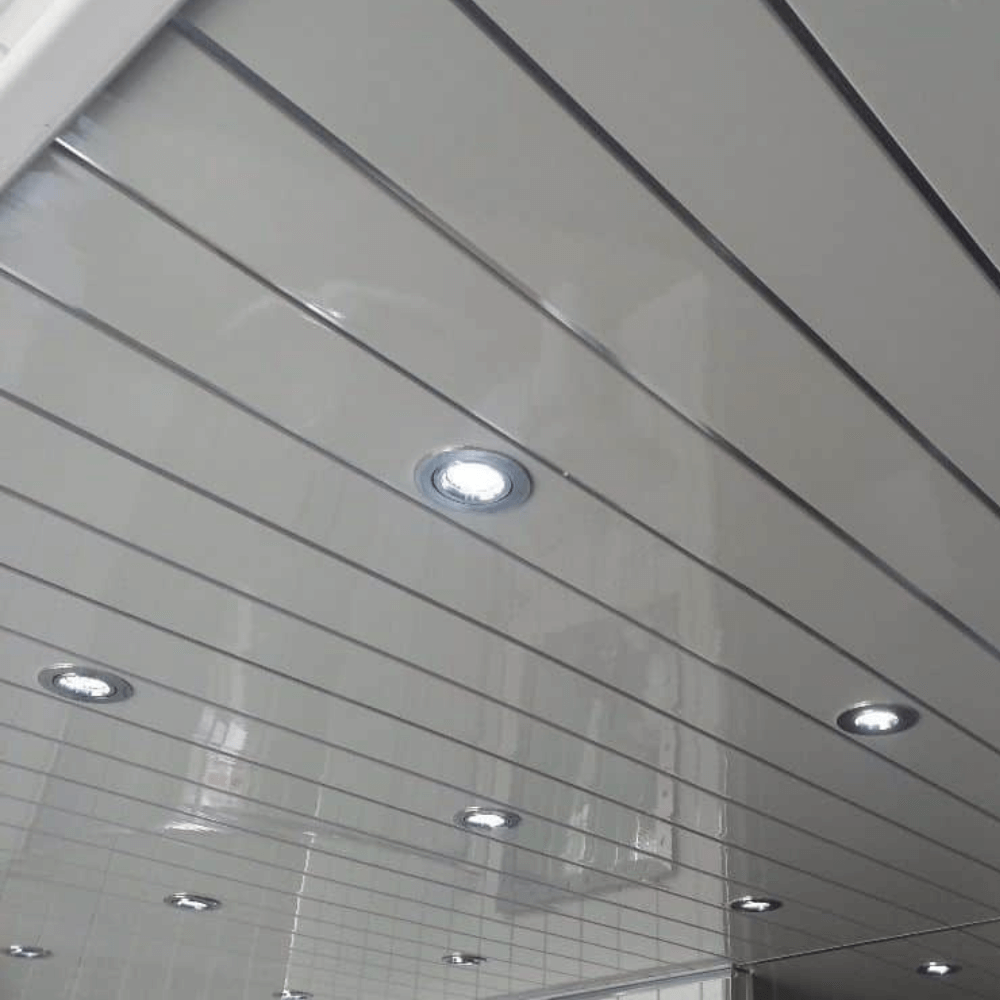
Natural light can bring out colour and veining, while spotlights may highlight gloss, sparkle or metallic details. Darker bathrooms may benefit from lighter surrounding walls, illuminated mirrors or well-positioned ceiling lights.
Before choosing, look at a sample in the room at different times of day.
Place it beside the flooring, vanity unit and fittings you plan to use. This gives you a clearer idea of how the complete scheme will work together.
Bold shower panels do not have to make a bathroom feel overwhelming.
Give the design one clear focal area, balance it with white sanitaryware and quieter surfaces, and repeat the finish only where it helps connect the room.
The strongest bathrooms are not always the ones with the most detail. They are the ones where every colour, pattern and fitting has a clear role.