How to Make Acoustic Panels Look Built-In: Ideas for Alcoves, Shelving, Fireplaces and Fitted Furniture
Time to read 6 min
Time to read 6 min
One of the reasons acoustic panels work so well in modern interiors is that they can make a room feel more considered without the cost of full bespoke joinery.
Used carefully, they do not just decorate a wall. They can frame a fireplace, line an alcove, define shelving, elevate fitted furniture and give ordinary layouts a much more custom feel.
The secret is not always using more panelling. Often, it is about using it more precisely.
If you want acoustic panels to look built-in rather than simply applied, these are the details that make the difference.
A built-in finish instantly makes a room feel more intentional. It gives structure to awkward spaces, creates better visual balance and helps features like shelving, desks and fireplace walls feel like part of the architecture rather than furniture placed against it.
This approach works particularly well with acoustic panels because the vertical slatted detail already feels clean, architectural and repeatable. Once you start using panels inside recesses, around storage or within defined sections, the whole room feels more tailored.
The easiest way to create a built-in look is to work with the features your room already has. Alcoves, chimneys, recesses, fitted desks and shelving units all give you natural stopping and starting points.
Instead of treating the whole wall the same way, use those architectural breaks to make the installation feel more deliberate.
If a wall already has a recess, a chimney or fitted storage, those edges can become your frame. This immediately makes the panels feel integrated rather than decorative.
Sometimes a smaller panelled section looks more expensive than full wall coverage because it feels intentional and proportioned.
Alcoves are one of the best places to use acoustic panels. Because they are naturally set back from the main wall, adding texture behind shelving or furniture instantly creates depth.
This works especially well in living rooms, dining spaces and home offices where alcoves can otherwise feel awkward or underused.
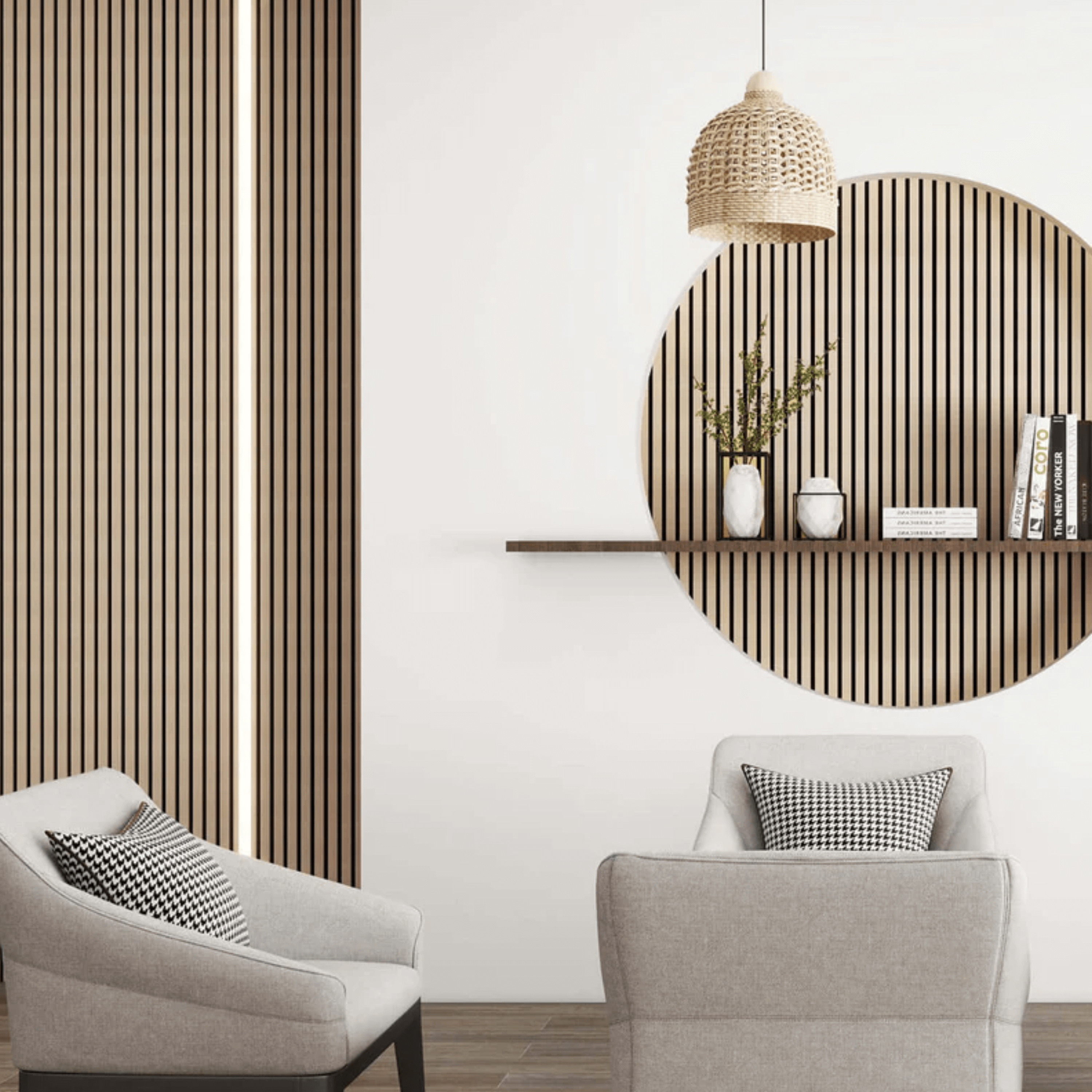
One of the cleanest ways to get the built-in look is to use acoustic panels as the backdrop to shelves or fitted units. This adds texture without making the overall design too busy.
Where the panelling starts and stops matters. Clean edges make the installation feel intentional. Messy transitions make it feel temporary.
A fireplace wall is already a focal point, so acoustic panels can help you make more of it without needing stone, tile or complicated joinery.
You can use them around a chimney breast, on both sides of a decorative fireplace, or across the whole wall for a more balanced built-in look. This creates texture and warmth while keeping the space clean and contemporary.
Important: the fireplace shown here is decorative only. Acoustic panels should never be installed near direct heat sources, open flames or active fireplaces, as the material is flammable.
If you are panelling around a fire or media unit, make sure the main feature feels visually centred. The slats should support the layout, not compete with it.
If one side of a fireplace has shelving or storage, try to balance the other side in some way, even if it is only with panel width or spacing. Symmetry is not essential, but balance is.
Open shelving can easily feel cluttered if the wall behind it is too plain or too busy. Acoustic panels solve that by giving the background texture and depth while keeping the palette clean.
This is a simple trick, but it has a big effect. Shelves instantly feel more thought through, and the objects on them stand out better too.
When the wall has texture, you do not need to overload shelves with styling. That usually leads to a cleaner, more premium result.
One of the most effective ways to get the built-in look is to use acoustic panels with fitted desks, sideboards, storage or cabinetry.
Panels can sit behind furniture, inside recesses or even wrap around surrounding sections to make the whole installation feel joined up.
A fitted desk area can feel much more complete when the wall behind it is panelled. It helps define the zone and makes even a small workspace feel more bespoke.
In compact rooms, adding more cabinets is not always the answer. Sometimes using the wall better has more impact.
One of the biggest mistakes with acoustic panels is assuming they always need to cover an entire wall. In many cases, partial use creates a more expensive-looking finish.
This is especially true when panels are used to define a section behind furniture, frame a feature or line a recess.
Think of acoustic panels as a way to shape the architecture of the room. They do not always need to be the whole story.
The width of the panelled section should feel connected to the furniture or feature it is supporting. A narrow desk area, shelving bay or fireplace section usually looks best when the panelling relates directly to it.
Even if you are using panels around a TV, the goal does not have to be a full media wall. A more built-in look often comes from using panels inside recesses, between fitted cabinetry or behind a more compact unit.
This makes the TV feel integrated into the room rather than floating on a decorative wall
If you imagine how bespoke cabinetry would frame the TV, you will usually land on a more refined panel layout.
The built-in effect is not only about layout. Colour plays a big role as well.
Natural oak tones are often the easiest choice if you want a warm, seamless look. Walnut can feel richer and more dramatic, especially when paired with darker furniture or black details. Lighter finishes can be a great option in smaller rooms where you want the panelling to feel softer and less dominant.
Look at flooring, cabinetry, shelving and paint colour before choosing the panel finish. The built-in look works best when the whole palette feels connected.
There are a few styling decisions that instantly push acoustic panels towards a more bespoke result.
Integrated or nearby lighting helps bring out the texture of the slats and makes the installation feel more polished.
If the wall already has strong texture, too much décor can make the area feel cluttered. A cleaner styling approach usually looks more premium.
If your shelving, furniture or accessories pick up the tone of the panels, the whole room feels more cohesive.
If you want acoustic panels to feel built-in, the strongest places to start are:
You do not need a full joinery project to make a room feel custom designed. With the right layout, proportions and finish, acoustic panels can give alcoves, fireplaces, shelving and fitted furniture a far more built-in feel.
The key is to use them with purpose. Start with the features the room already gives you, keep the layout clean, and let the panels support the architecture rather than overpower it.
Related product
Natural Oak Acoustic Wall Panel
£19.90
£80.00