SPC Flooring vs LVT Flooring: What’s the Difference, and Which Is Better?
Time to read 2 min
Time to read 2 min
Luxury Vinyl Tile (LVT) has dominated flooring searches for years, and for good reason. It’s practical, attractive, and widely available. But flooring technology is always advancing.
Stone Plastic Composite (SPC) flooring is quickly becoming the smarter choice for modern homes and light commercial spaces, offering improved stability, durability, and waterproof performance compared to traditional LVT.
If you’re researching LVT and SPC flooring and wondering what the key differences are, this guide explains the key differences between the two and helps you decide which flooring suits your space best.
LVT flooring is a flexible vinyl flooring designed to replicate natural materials such as wood or stone. It’s popular in residential interiors thanks to its affordability and variety of designs.
Typical benefits of LVT flooring include:
A wide choice of styles and finishes
Softer, warmer feel underfoot than tiles or stone
Suitable for most residential rooms
Lower cost compared to natural materials and SPC flooring
However, LVT has some limitations, particularly in high-traffic or moisture-heavy areas. Because it is flexible, it can be prone to movement, expansion, and indentations if the subfloor is not perfectly prepared.
SPC flooring is a newer generation of rigid core vinyl flooring. Instead of a flexible vinyl base, it uses a Stone Plastic Composite core, combining limestone and stabilisers to create an extremely strong, dimensionally stable plank.
This rigid structure is what sets SPC apart from LVT.
Key advantages of SPC flooring include:
Unlike LVT flooring, SPC flooring has stabilisers built into the core. This ensure a flat flooring surface with less effort and worry of bumps on the flooring surface
Exceptional strength and resistance to movement
100% waterproof construction
Superior performance in bathrooms, kitchens, and hallways
Better resistance to dents, scratches, and temperature changes
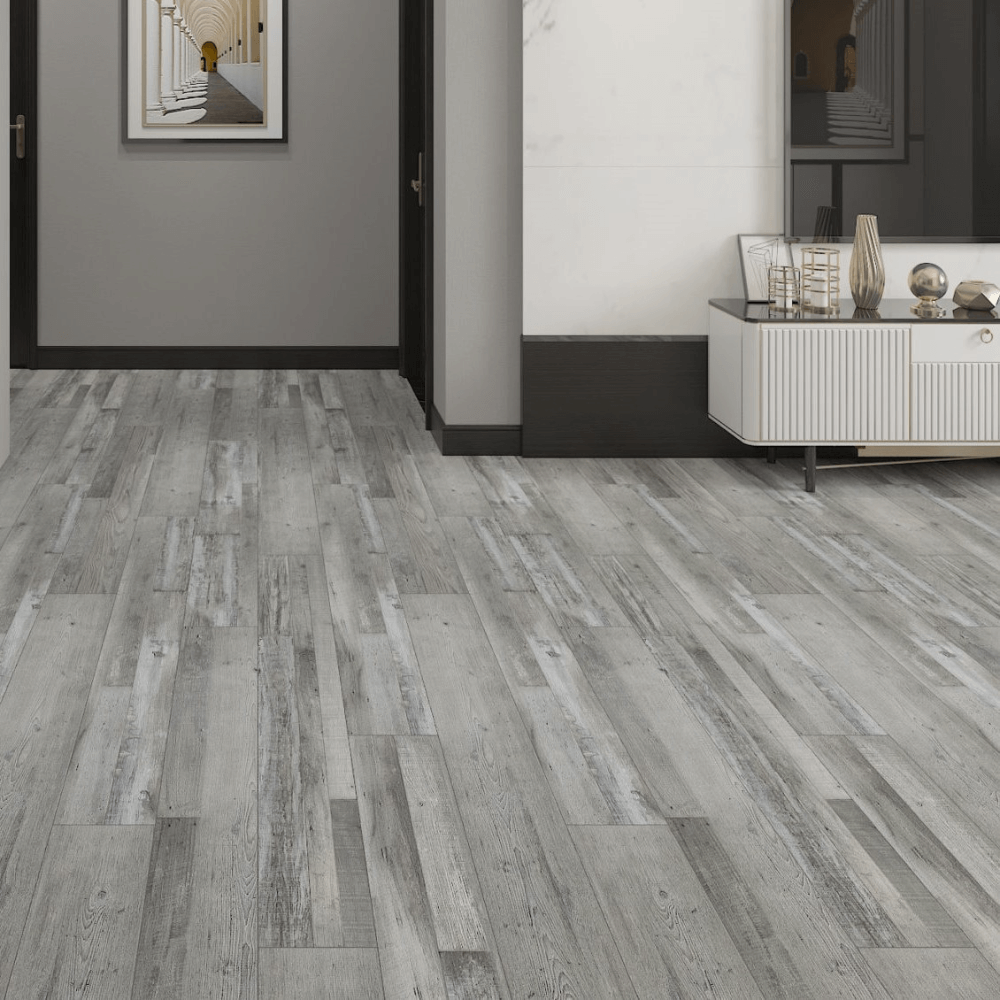
SPC flooring delivers the same realistic designs as LVT, but with added peace of mind and longevity.
Core Structure:
LVT uses a flexible vinyl core, while SPC features a rigid stone composite core that prevents warping and expansion.
Water Resistance:
Both are water-resistant, but SPC is fully waterproof and better suited to wet areas.
Stability:
SPC remains stable even on slightly uneven subfloors, whereas LVT requires more precise preparation.
Durability:
SPC is more resistant to impact, heavy furniture, and daily wear.
Installation:
Both use a click-lock system, which makes installation easy, but SPC is generally more forgiving to install. SPC flooring has built-in stabilisers that make levelling a floor much easier and more accurate.
Acoustics:
Many SPC floors include integrated acoustic underlay for quieter footsteps, something not always included with LVT.
As homes become more open-plan and multi-functional, flooring needs to handle moisture, foot traffic, and temperature changes without compromising on style.
SPC flooring is particularly well suited to:
Bathrooms and kitchens
Hallways and entrances
Open-plan living areas
Light commercial environments
It offers the look of stone or wood with none of the coldness, grout lines, or maintenance demands.
LVT flooring remains a solid option for low-traffic, dry areas and budget-focused projects. Its popularity means there’s a huge range of styles available, and for some homes it will do the job well.
However, if you’re already investing in a new floor and want better durability, stability, and long-term performance, SPC flooring is the more future-proof choice.