Warm Wood, Black Details, Soft Lighting: The Interior Formula Making Acoustic Panels So Popular
Time to read 5 min
Time to read 5 min
Acoustic panels are not just popular because of what they do. They are popular because of how they make a room feel.
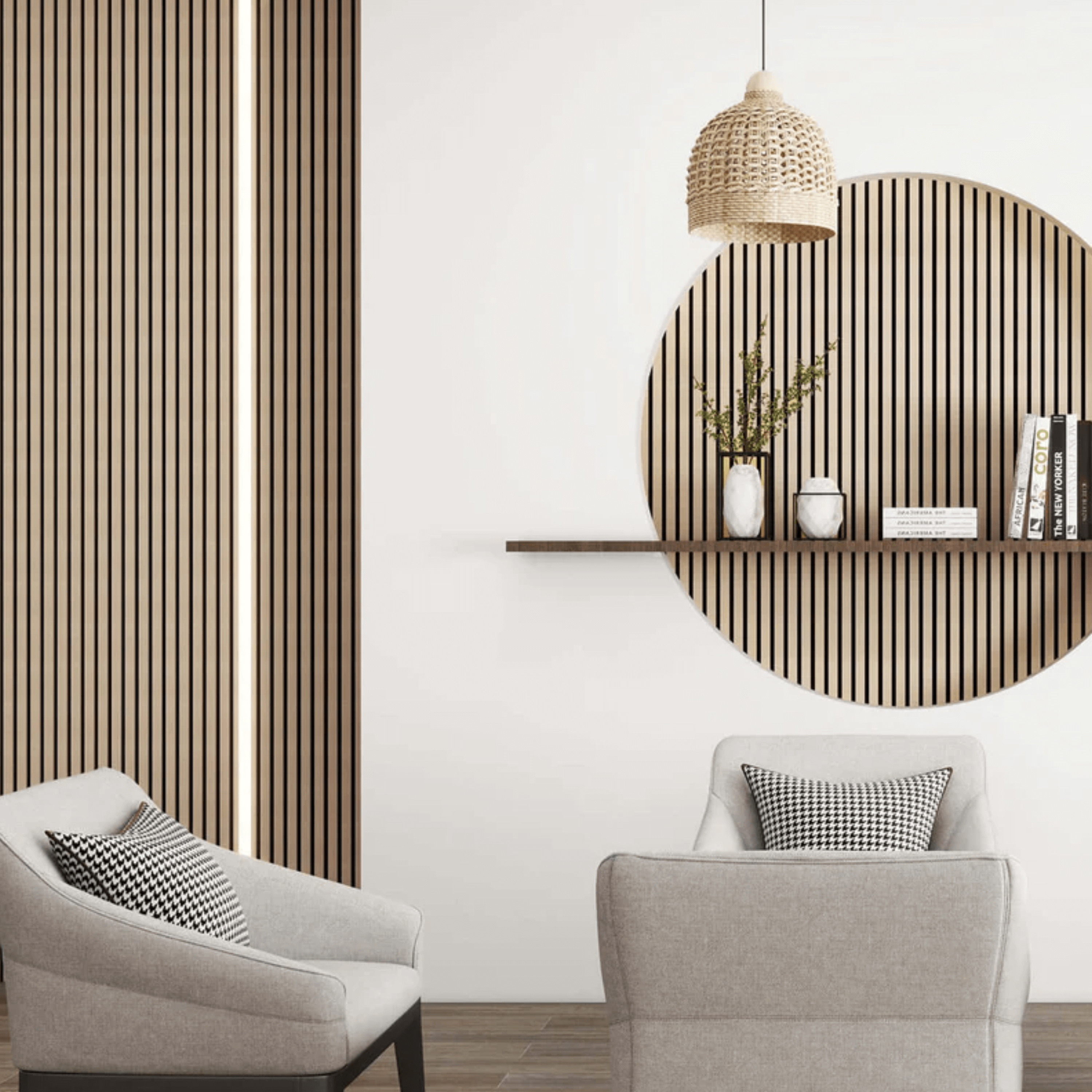
Across some of the strongest interiors using acoustic panels, the same formula keeps appearing again and again. Warm wood tones. Black accents. Soft lighting. Clean lines. Calm, neutral walls. It is a combination that feels modern and architectural, but still warm and easy to live with.
That balance is a big part of why acoustic panels work so well in today’s homes. They bring texture and structure, but they still feel softer than a lot of harder, colder contemporary finishes. Easy Panels’ own acoustic content already highlights how panel colour, room styling and surrounding materials can shape the final result, while broader design inspiration continues to treat slatted wall panels as a visual statement in their own right.
If you want to recreate the look, these are the details that matter most.
Warm wood, black details and soft lighting create contrast in a way that still feels balanced.
The wood brings warmth and natural texture. The black details add definition and structure. The lighting softens the whole room and highlights the depth of the slats. Together, they create a look that feels refined without becoming too stark or too styled.
This is one reason acoustic panels fit so naturally into living rooms, bedrooms, dining spaces and home offices. They help a room feel more designed without needing lots of extra decoration.
The first decision is the wood tone, because that sets the mood for the whole space.
Natural Oak usually feels lighter, softer and easier to style. It works beautifully in rooms where you want the panels to add warmth without becoming too dominant.
Walnut creates a richer, darker and more dramatic feel. It is often the stronger choice if the room already has black details, moodier lighting or a more statement-led design direction.
White Ash and lighter finishes can soften the look even further, especially in smaller or darker spaces.
Without contrast, warm wood can sometimes feel too soft on its own.
That is why black accents work so well with acoustic panels. They give the room a sharper edge and help anchor the design. Fireplaces, media units, shelving, picture frames, door handles, light fittings and mirror frames can all do this.
The key is not to overdo it. A few black elements are usually enough to create balance and make the wood tones stand out more clearly.
Lighting plays a huge role in how acoustic panels look.
The slatted surface already creates natural shadow and texture, but warm lighting brings that out even more. It gives the wood a richer tone and helps the room feel calmer and more layered.
This is especially effective with LED strips, wall lights, floor lamps and soft ceiling lighting. Across trend-led interiors, it is often the lighting that turns a simple panelled wall into a much more premium feature.
One of the reasons this formula works so well is that the surrounding palette usually stays calm.
Neutral walls let the acoustic panels lead without making the room feel too busy. Warm whites, soft greys, greige and muted stone tones all work beautifully because they support the wood rather than competing with it.
This is particularly important when the panels are being used across a larger wall. The more visual weight the panelled section has, the more helpful it is for the rest of the room to stay quieter.
This is one of the most important styling details.
If the acoustic wall is already adding texture, pattern and warmth, the furniture usually works best when it stays simple. Clean-lined sofas, uncluttered sideboards, minimal dining tables and low-profile units all help the wall feel more intentional.
The goal is not to strip the room back completely. It is to let the panelled wall do more of the visual work.
Living rooms are one of the most natural places for this formula because the mix of warmth and structure works so well around fireplaces, media units and larger seating areas.
Natural oak panels paired with black fireplaces, soft lighting and neutral upholstery create a living room that feels modern, welcoming and easy to style. If you want a richer look, walnut panels with darker details can take the space in a more dramatic direction.
In bedrooms, acoustic panels can feel softer and more intimate. The same formula still works, but it usually needs less contrast and gentler lighting.
Natural oak, warm neutrals and simple black accents can make the room feel calm and more boutique in style. If the wall is panelled, keep bedding, side tables and accessories relatively restrained so the room still feels restful.
Dining rooms are one of the strongest places to use acoustic panels because they can sometimes feel flat without a stronger backdrop.
A full panelled wall behind a dining table or sideboard adds instant warmth and definition. This works especially well with black dining chairs, warm pendant lighting and simple table styling.
If you want a broader guide to colour and styling, this is a natural place to link to Perfect Harmony: Blending Acoustic Panels with Home Decor.
This combination works because it feels current without being too trend-led.
It is modern, but not cold. It is warm, but still clean. It feels styled, but not difficult to live with. That balance is exactly why acoustic panels continue to perform so well in design-led homes and why the wood slat wall trend still feels relevant across living rooms, dining spaces and bedrooms.
If you love the combination of warm wood, black details and softer lighting, acoustic panels are one of the easiest ways to bring that look into your home.
Whether you are styling a living room, dining space or bedroom, the key is to keep the palette balanced, let the wall add the texture, and keep the surrounding furniture simple enough for the finish to stand out.