27mm vs 50mm Acoustic Panel Slats: Which Look Suits Your Room?
Time to read 4 min
Time to read 4 min
When choosing acoustic wall panels, colour is usually the first thing you notice. But there is another detail that can completely change the finished wall: the width of the slats.
A 27mm slat creates a slimmer, more closely repeated pattern. A 50mm slat gives you broader lines and a more pronounced slatted effect.
Neither is the right choice for every room. It comes down to the look you want to create.
If you are deciding between the two, start by looking at the proportions, then think about the size and style of the wall you want to panel.
Explore the full Acoustic Wall Panel collection as you compare the different finishes and slat widths.

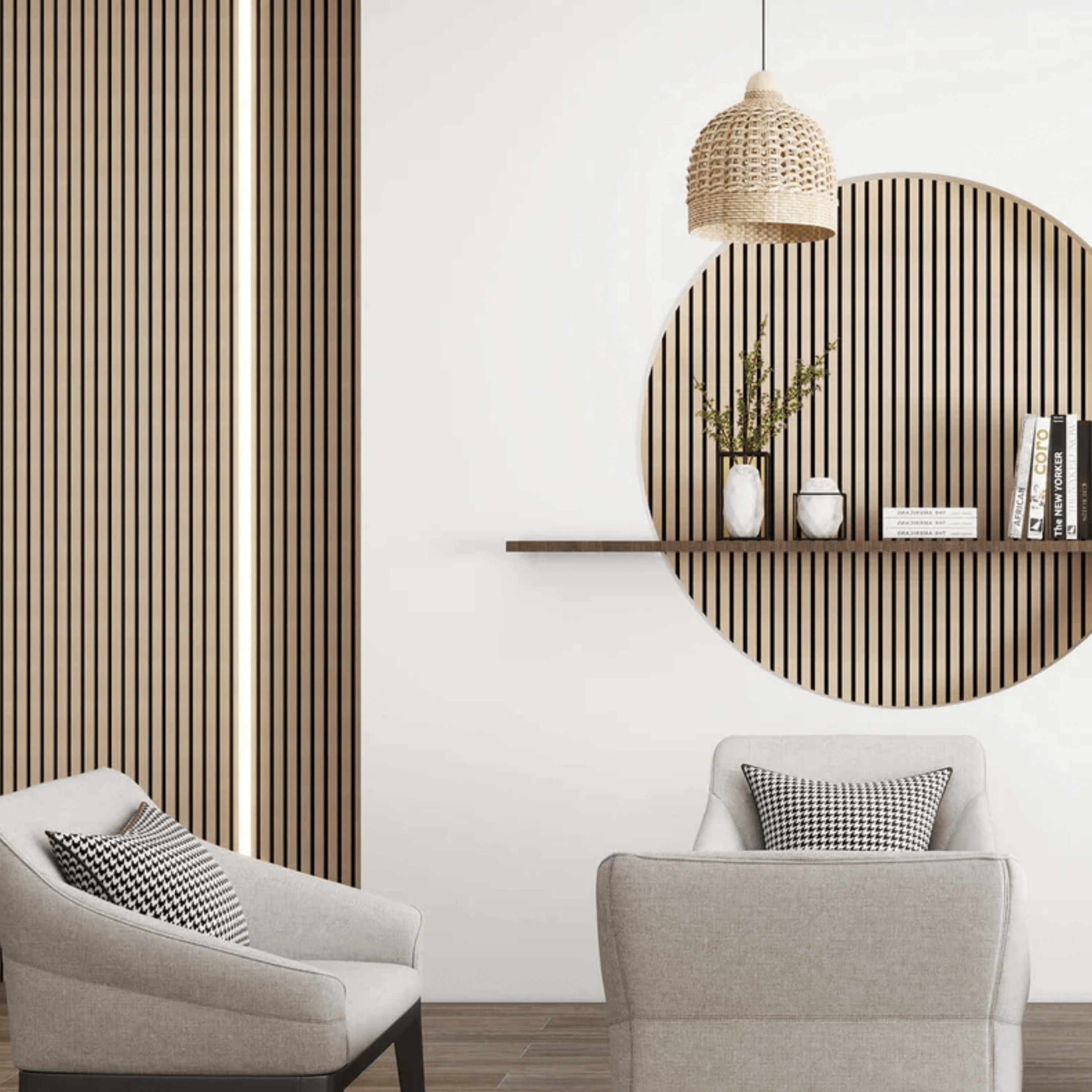
Side by side, the difference between 27mm and 50mm slats is easy to see.
The slimmer slats create more vertical lines across the wall. This gives the panelling a finer, more detailed appearance.
From a distance, the repeated pattern can feel quite rhythmic, making 27mm panels a versatile choice for everything from a full feature wall to a smaller section behind a desk, television or piece of furniture.
Another advantage is the choice of panel heights. Our standard 27mm acoustic panels are available in 120cm, 240cm, 260cm and 280cm heights, all at 60cm wide. This gives you more flexibility when covering anything from a smaller feature section to a full-height wall.
With wider slats, each individual piece of wood becomes more noticeable.
The pattern feels broader and the contrast between the wood finish and black felt is more defined. This can create a stronger architectural look, particularly when the panels cover a large section of wall.
When comparing the two, try to view close-up images at the same scale. A cropped product photograph can make two different slat widths appear much more similar than they really are.
Close-ups are useful, but the difference becomes much clearer when you see the panels across a full wall.
With 27mm slats, your eye sees a greater number of narrow lines. With 50mm slats, there are fewer, broader lines across the same area.
Think of it in the same way you might compare narrow and wide floorboards. The material and colour can be similar, but changing the proportions alters the character of the whole surface.
Where possible, compare the same colour in both formats. Natural Oak, Grey Oak and White Ash are particularly useful for this because you can focus on the difference in slat width without the colour influencing your decision.

You do not need to match a particular slat width to a particular room. Instead, think about how much wall you are covering and how prominent you want the panelling to feel.
A 27mm design can work well on narrower walls or defined sections.
Think about panelling behind a home-office desk, within an alcove or across a smaller media-wall backdrop. The slimmer pattern adds detail without relying on large proportions to make an impact.
Both widths can work beautifully in bedrooms.
A 27mm panel can create a softer repeated texture behind a bed, while the wider 50mm format can make the wall itself feel like a stronger design feature.
Your furniture can help guide the decision. Fine, understated furniture may suit the narrower rhythm, while larger furniture and simpler shapes can sit comfortably against the wider format.
On a broad living-room or media wall, 50mm slats have more space to show their proportions.
The wider wood faces become part of the design rather than simply forming a background texture.
That does not mean you need a large room to use them. It simply means the difference between the two widths is often easier to appreciate when you can stand back and see a larger section of panelling.

Slat width is only one part of the finished look.
Look at the other lines already in the room. Window frames, shelving, cabinetry, fireplaces and furniture all influence how the wall will feel. If the room already contains lots of fine detail, the wider 50mm format can introduce a simpler, broader pattern.
If the room is very minimal, the repeated lines of the 27mm design can add more visual texture.
There is no need to follow a strict rule. Use photographs of complete rooms rather than relying only on isolated product images and choose the proportion that feels most natural alongside your furniture.
Once you know which proportion you prefer, look at the colours available in that format.
The 50mm acoustic panels are available in Natural Oak, Grey Oak and White Ash.
These three finishes let you compare the wider slat design across warmer, cooler and lighter wood tones.
The 27mm format gives you a wider choice of finishes:
Colour can also change how prominent the slats appear. A lighter wood against black felt creates clearer contrast, while deeper finishes such as Walnut, Charcoal and Rosewood can give the wall a darker, richer feel.

If you are still undecided, forget the measurements for a moment and ask one simple question:
Do you prefer a finer repeated pattern or broader, more defined lines?
Most importantly, compare them as complete walls rather than judging them from a tiny crop. The difference is about proportion, and proportion only really makes sense once you see it in context.
Slat width should also be treated as a visual choice rather than an indication that one design automatically offers greater acoustic performance.
Sometimes the easiest way to choose is to put the two proportions side by side.
Compare the colours, look at full-wall photographs and think about the scale of the feature you are creating.
You can also order acoustic panel samples to compare the finish and detail more closely before deciding which look belongs in your room.