Beige, Greige or Grey? Choosing Bathroom Panels That Work with Your Existing Colours
Time to read 6 min
Time to read 6 min
Choosing a neutral bathroom panel sounds straightforward until you put two samples next to each other.
One grey looks blue. Another feels warmer. A beige that seemed subtle on screen suddenly looks yellow beside the bath.
The difference often comes down to undertones and the colours surrounding them.
Start with the floor, furniture and fittings you are keeping. The right panel should sit comfortably alongside those finishes and help create the atmosphere you want.
Whether you prefer warm beige, balanced greige or cool grey, here is how to narrow down the options.
Before browsing panels, take a moment to look around your bathroom.
Which surfaces will remain after the refresh?
The floor and vanity are useful starting points because they occupy a noticeable part of the room. Then consider the bath, basin, worktop and any painted walls that will still be visible.
Look beyond the basic colour name.
An oak-effect floor might have golden, pale sandy or reddish tones. A grey vanity could lean towards blue, green or brown. Even two white finishes can look different beside each other.
Choose the largest fixed surface as your starting point. If the flooring is staying, hold your panel shortlist beside it before deciding whether the colours work.
Smaller details, such as towels and soap dispensers, are easier to choose once the main finishes are settled.
These colour families overlap, and individual designs can vary considerably. Use them as a starting point for your shortlist.
| Colour family | What to look for | The effect you might want |
|---|---|---|
| Beige | Sandy, creamy, golden or pinkish undertones | A warm, soft backdrop |
| Greige | A mixture of grey and beige, sometimes leaning towards taupe | A muted neutral that connects warm and cool elements |
| Grey | Blue, green, violet or brown undertones | Anything from a crisp, cool scheme to a softer, warmer finish |
Beige can work well when you want the bathroom to feel softer, particularly beside timber and off-white finishes.
However, beige covers a wide range of shades. A creamy panel will create a different effect from a pinkish stone colour or a muted sandy finish.
If your floor already has a strong golden tone, compare a quieter beige alongside it. You may prefer that balance to adding another noticeably yellow finish.
Greige combines elements of grey and beige.
It can be a useful starting point when the room contains both, such as a grey floor and an oak vanity. Look for a sample that shares something with each surface.
Greige is not automatically compatible with everything. Some shades feel warmer or darker than others, so judge the actual sample in your room.
Grey can create a calm, understated bathroom, but two greys do not necessarily work together simply because they share a name.
A blue-grey panel beside a brown-grey floor may look noticeably different once installed.
You can use those differences deliberately. The key is deciding whether you like the contrast when the materials are together.
The wall and floor meet directly, making this one of the most useful combinations to check.
Place the sample upright near the floor so you can see both surfaces in their intended positions.
Start by identifying whether the floor feels golden, reddish or relatively neutral.
Soft beige and warmer greige are worth comparing beside golden oak. With paler, less yellow timber, you might also like a gentle grey.
You do not need the wall colour to match the wood. Look for a combination where both finishes feel intentional.
Check the floor’s undertone before choosing another grey.
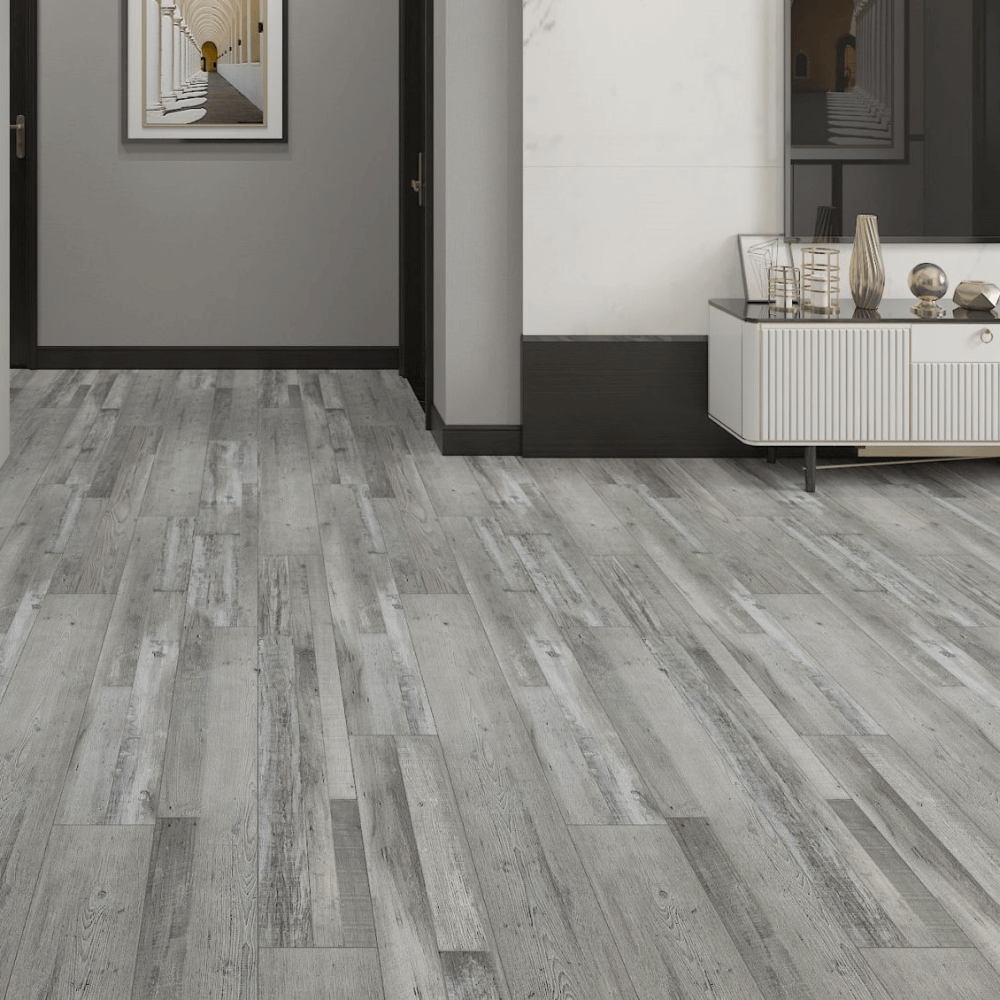
A warmer grey or greige panel may sit comfortably beside a taupe-grey floor. With a cooler floor, compare both a related cool grey and a softer neutral to see which atmosphere you prefer.
If the floor has a strong pattern, try a quieter wall design so the room has somewhere for the eye to rest.
Compare the warmth of the two finishes carefully.
A creamy floor and a pinkish beige panel may look less coordinated than expected. A muted greige could provide a useful contrast, while a related sandy tone could make the room feel more continuous.
Avoid choosing from separate photographs. Seeing the materials together makes these differences much easier to judge.
Once the wall and floor combination works, check it beside the furniture.
An oak vanity can introduce warmth into a grey scheme. A dark vanity can give pale beige walls more definition. White furniture may blend with the basin or stand out against it, depending on the shade.
Hold your panel sample close to the bath or basin too.
A warm panel can make white sanitaryware look crisp by contrast. But if an almost-white panel looks unintentionally yellow or grey beside the bath, you may prefer a more distinct colour difference.
You do not need every finish to match. A clear, considered contrast can be easier to work with than two shades that are nearly the same.
Chrome, brass and black fittings can all work with neutral panels.
Rather than treating them as strict colour rules, think about the effect they create.
Chrome adds a reflective detail and can work across warm and cool schemes.
Brass tones introduce warmth and can pick up golden details in a stone or marble design.
Black creates a defined outline, particularly against lighter walls.
Check the panel beside your actual fittings where possible. Brushed and polished finishes reflect light differently, and brass colours vary.
Include visible panel trims in this decision. Their colour becomes part of the finished scheme, especially at corners and exposed edges.
Use these combinations as starting points, then adjust them around the finishes already in your bathroom.
Panel direction: soft sandy beige or a subtle warm stone effect
Existing finishes: oak furniture, white bath and basin
Finishing touches: cream towels, muted green accessories and your existing metal fittings
The beige walls and timber share a sense of warmth, while the white sanitaryware creates a clear contrast.
If the oak is strongly golden, choose a panel sample with a more restrained warm tone.
Panel direction: a muted greige with gentle tonal variation
Existing finishes: grey floor, timber vanity or shelves, white sanitaryware
Finishing touches: off-white textiles and charcoal details
This is a useful combination to explore when you are keeping both warm and cool materials.
Look for a greige that relates to the floor without making the timber feel disconnected. A subtle pattern can help keep the overall scheme calm.
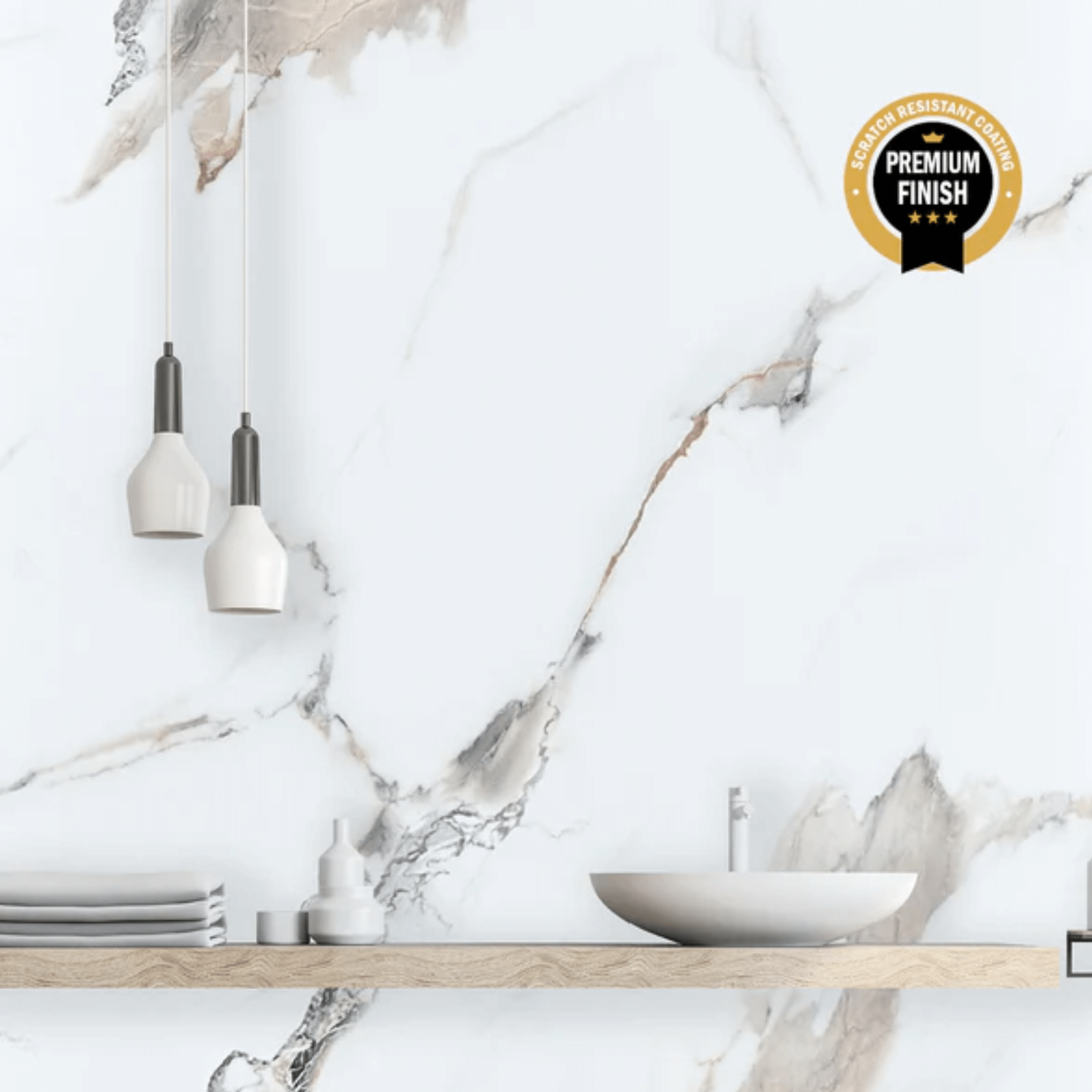
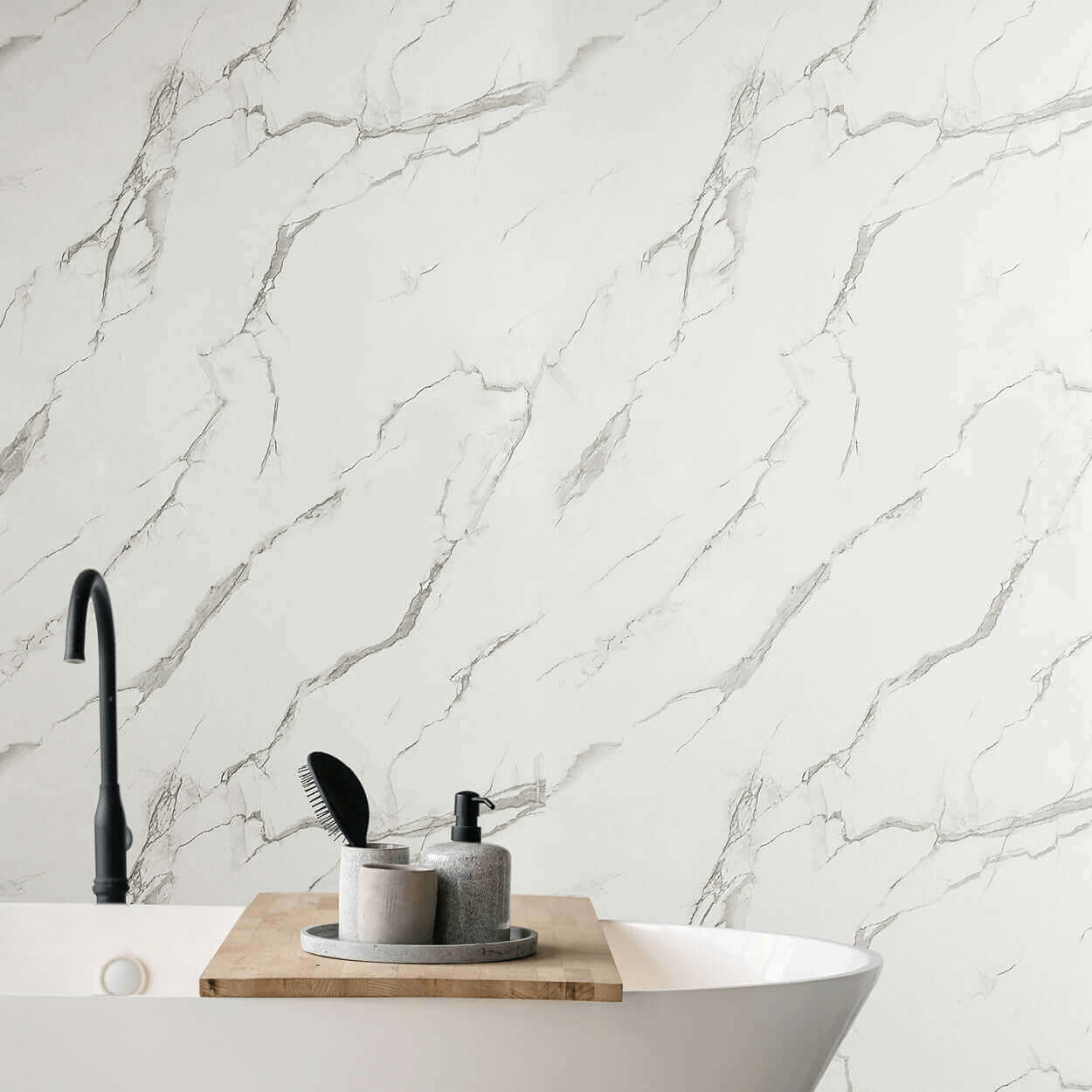
Panel direction: pale cool grey or a restrained grey marble effect
Existing finishes: white furniture and sanitaryware, a compatible grey floor
Finishing touches: black fittings or accessories and soft white towels
The pale surfaces keep the palette simple, while black details provide definition.
If the room feels too cool for your taste, try warmer textiles or a small timber accessory before adding another major finish.
A colour choice needs to work when you actually use the bathroom.
Look at your samples in daylight, then again with the bathroom lights switched on. Check them in the intended wall position and in a more shaded part of the room.
Hold the samples vertically rather than leaving them flat on a table.
Compare a few together to spot their undertones, then assess your favourite on its own. A sample can look warmer or cooler simply because of the one beside it.
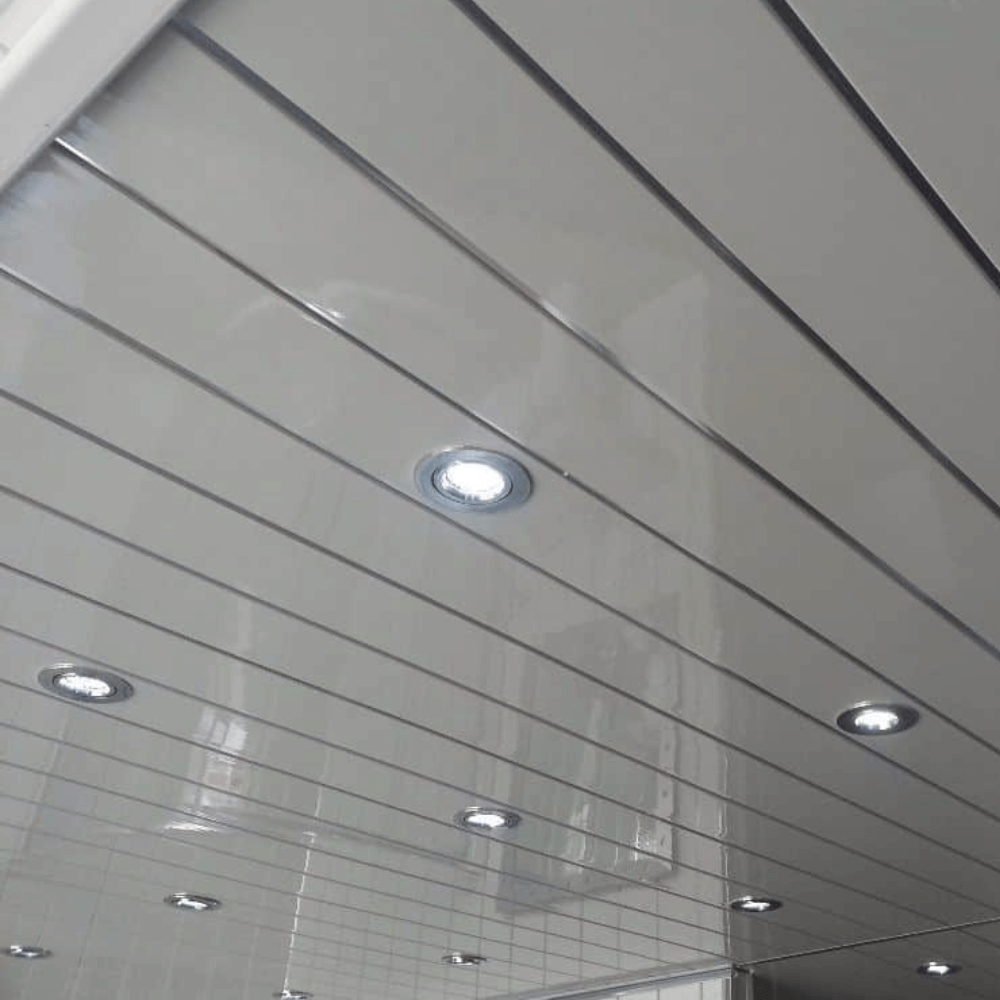
Also consider the surface finish. Reflections on a glossy panel can change how you perceive the colour, while a matt surface gives a different visual effect.
A small sample helps you assess colour and finish. Use full-panel and room photographs to judge the scale of the pattern.
Before ordering, check that your chosen panel works with:
The undertone of the existing floor.
The colour of the vanity and any timber.
The bath, basin and other white finishes.
The fittings and visible trims.
Both daylight and artificial lighting.
Beige, greige and grey can each create a beautiful bathroom. The most useful choice is the one that brings your existing finishes together in a way you enjoy.
Explore our Bathroom Wall & Shower Panels collection, then order samples to compare your shortlist where it matters: in your own bathroom.