10 Design Tips to Add the Perfect Finishing Touch to Your Bathroom
Time to read 6 min
Time to read 6 min
A bathroom can have beautiful wall panels and still not feel truly finished.
That is because the best bathrooms are never only about the wall surface. They are about how every detail works together. The trim colour, the mirror, the vanity, the lighting, the flooring and even the number of visible joins all influence whether the room feels simple, polished and well put together.
This is where bathroom wall panels can really stand out. Used well, they can create a clean, design-led look without the maintenance and complexity of traditional tiling. Our guide to bathroom trends for 2026 already highlights the move towards smarter surfaces, statement walls and more refined bathroom finishes, and the wider design world is moving in the same direction, with lighting, niches, brass details and layered materials all helping bathrooms feel more considered.
If you want your bathroom panels to feel more elevated and complete, these are the 10 details that can make the biggest difference.
One of the simplest ways to create a more polished bathroom is to simplify the wall surface.
When there are fewer visual interruptions, the room feels calmer and more refined. That is one reason large-format shower panels work so well in premium bathrooms. They create a smoother, more seamless finish than lots of smaller sections or heavily broken-up walls.
In practical terms, that means thinking carefully about where joins fall and how the eye moves across the room.
The less attention the construction draws to itself, the cleaner and more finished the bathroom tends to feel.
Trim colour has a huge effect on the final look.
If you want the bathroom to feel considered, the trims need to connect with the rest of the room. Chrome can keep the look clean and classic. Black can create contrast and definition. Brushed brass is one of the strongest choices if you want a warmer, more elevated finish, especially when it is repeated across taps, shower frames or mirror details. Brass remains a prominent bathroom trend across design content and showroom styling, particularly when paired with marble-look surfaces and softer lighting.
If you are unsure which finish works best with your chosen style, our guide on how to choose PVC trims is a useful place to start.
The key is consistency. When trim finishes feel linked to the rest of the bathroom, the whole design feels more intentional.
Mirrors do much more than reflect light. In a premium bathroom, they help set the tone.
A large round mirror, an arched shape or a slim metal frame can immediately elevate a vanity wall. This matters even more when you are using wall panels, because the right mirror helps break up the surface in a purposeful way rather than leaving the wall to do all the work.
If the panel finish is soft and understated, a stronger mirror shape can bring character. If the panel itself is bold, a more minimal mirror often keeps the space balanced.
Luxury bathrooms rarely rely on one harsh overhead light.
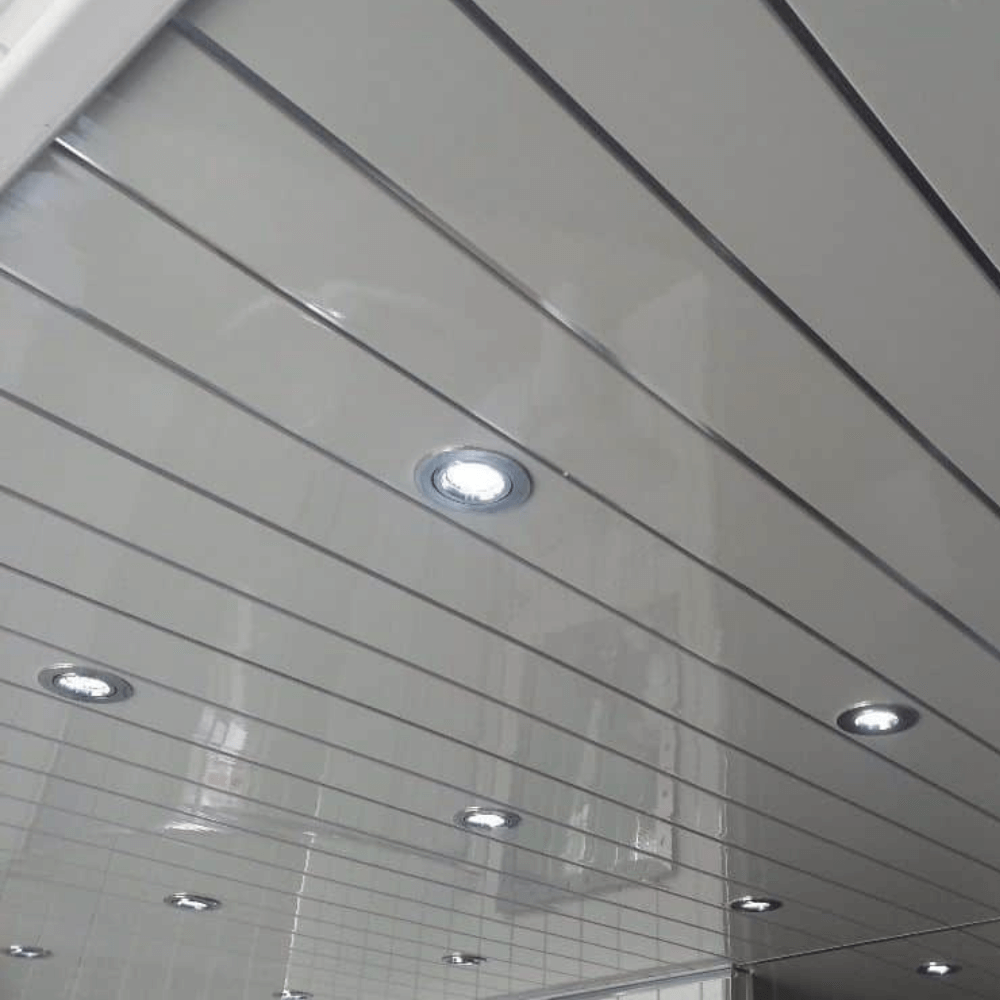
Layered lighting is one of the easiest ways to make panels look more expensive. Warm light brings out the depth in marble and stone finishes, softens the room and creates a more flattering, hotel-style atmosphere. Design guidance on bathroom lighting consistently points to layered light as the key to making a bathroom feel both functional and elevated.
Wall lights beside a mirror, soft ceiling lighting and subtle illumination around niches or vanity areas can all make a major difference. The panel finish may be the backdrop, but lighting is what reveals it properly.
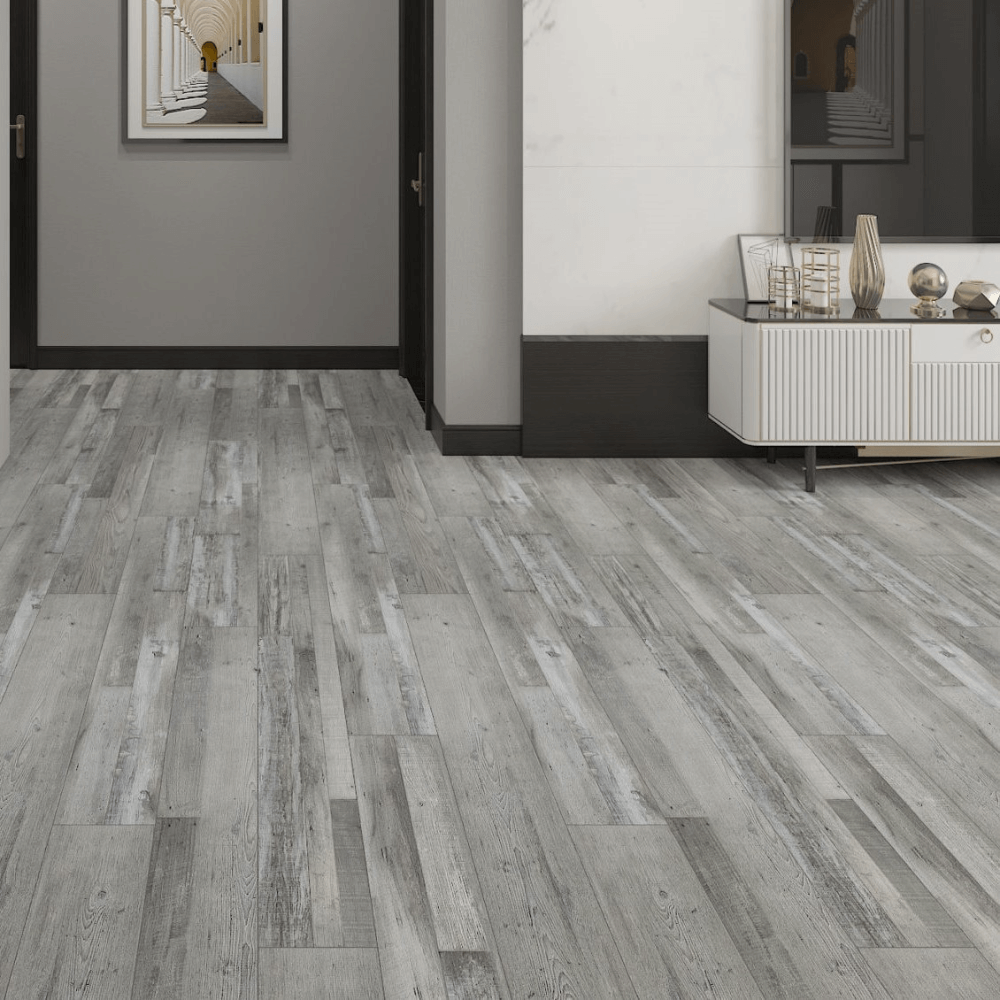
Flooring has a huge influence on whether a bathroom feels high end or too busy.
If your wall panels have strong veining or texture, the floor often works best when it is calmer and more understated. If the walls are more minimal, the floor can bring a little more character. The most successful bathrooms tend to create contrast without conflict.
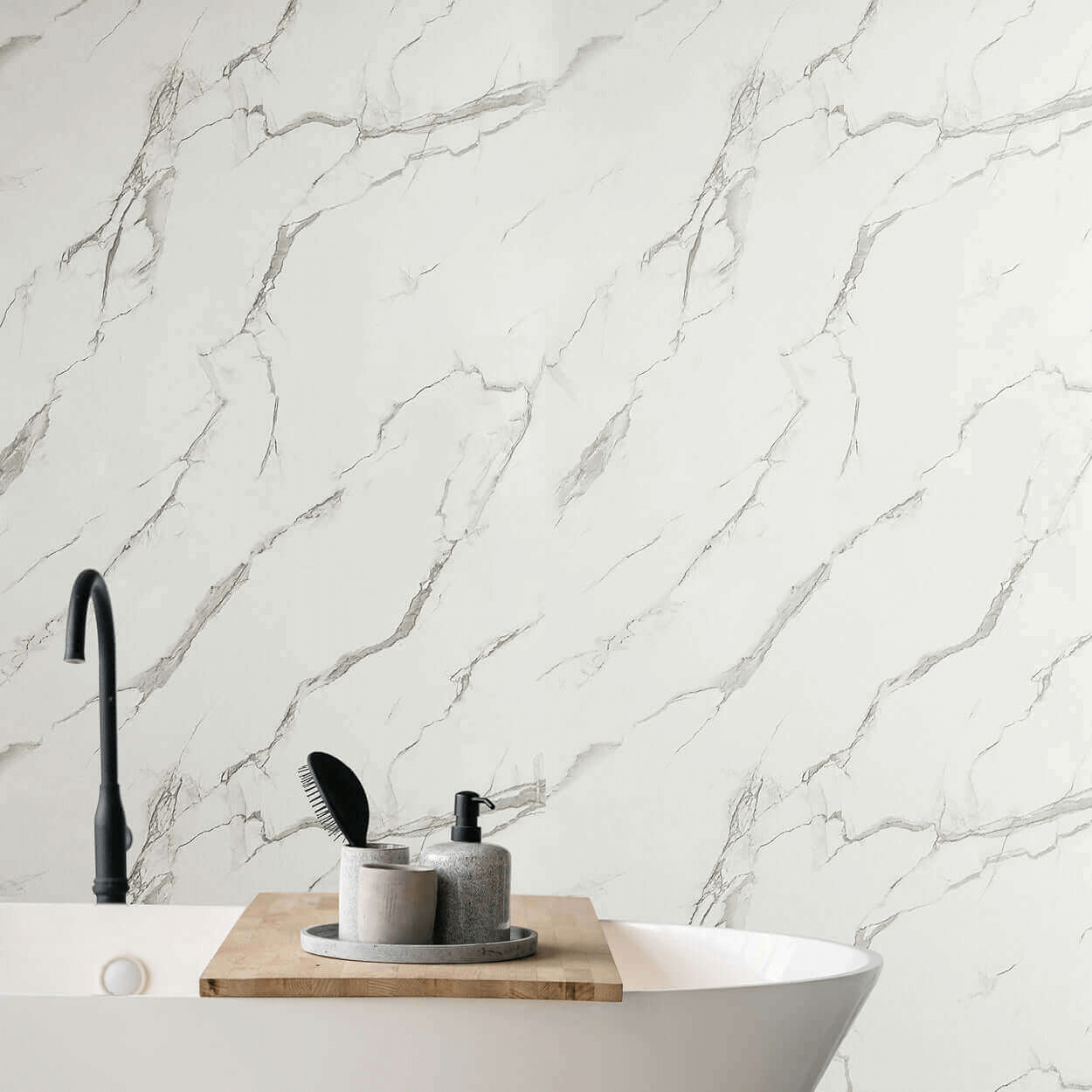
This is especially important with marble-effect panels. Pairing them with the wrong floor tone can make the whole room feel disjointed. Pairing them carefully makes the space feel layered and considered.
Some material pairings naturally feel more premium than others.
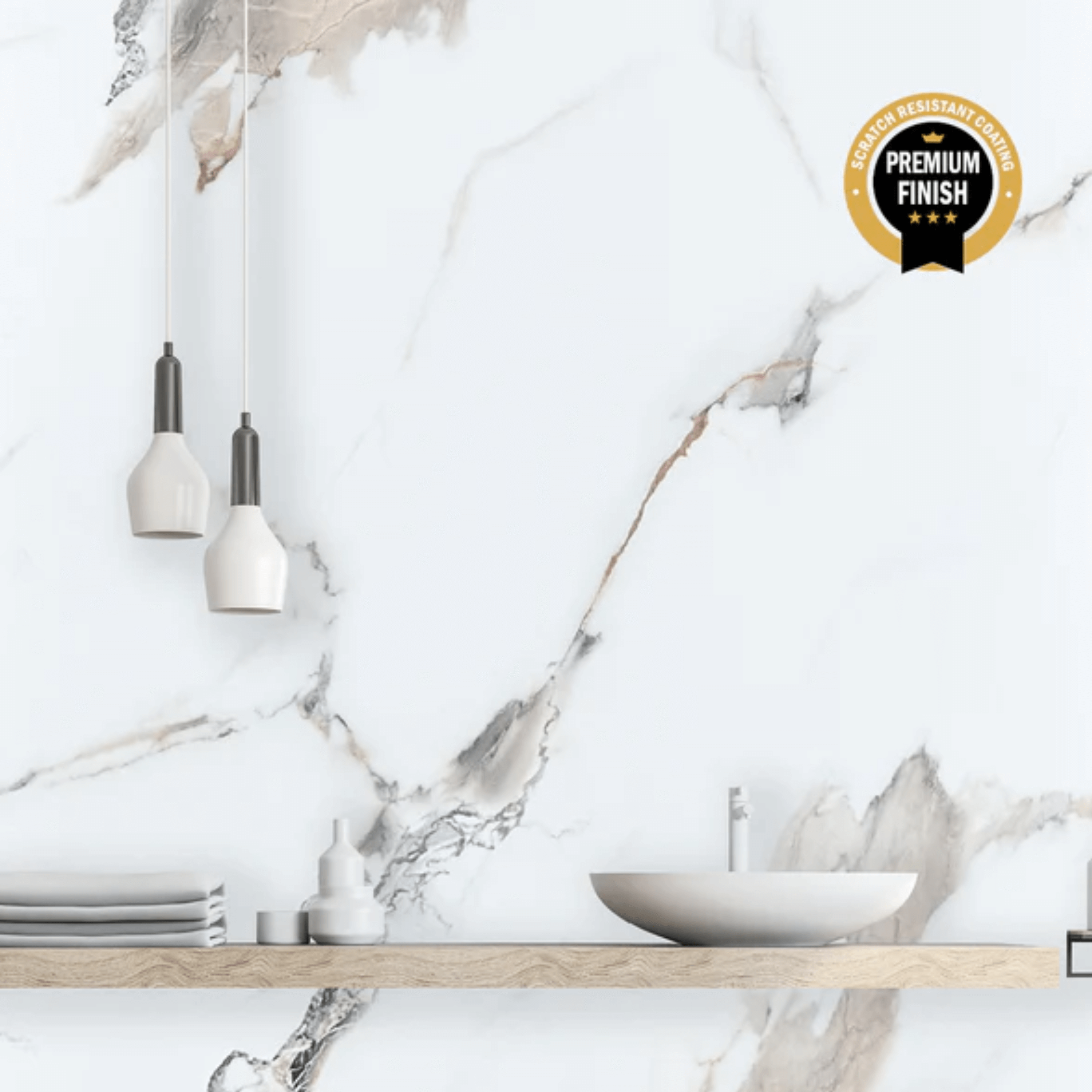
Marble-look bathroom panels with brushed brass details are one of the strongest examples. The crispness of the marble, combined with the warmth of brass, creates a finish that feels soft, luxurious and current. This pairing continues to show up across luxury bathroom inspiration and brass bathroom trend coverage.
This does not mean every element needs to be gold-toned. Often, just a few brass accents are enough. A framed mirror, a shower trim, a tap or a wall light can be all it takes to lift the look.
A niche is practical, but it is also visual.
In a premium bathroom, storage is usually integrated as neatly as possible. A niche helps products feel built into the wall rather than added afterwards, which immediately gives the room a more bespoke feel. Bathroom niche design remains a strong focus in bathroom inspiration because it combines function and a cleaner overall look.
When paired with wall panels, niches can look especially smart because they break up the surface in a clean, architectural way. They also give you another opportunity to repeat a trim finish or add subtle lighting.
Even beautiful panels can lose impact if the vanity feels disconnected from the rest of the room.
The most expensive-looking bathrooms tend to use vanity units that support the tone of the walls rather than fighting against them. Warm wood can soften marble and stone. Darker furniture can add contrast. Floating styles can help smaller bathrooms feel lighter and more open.
The goal is not for every element to match, but for them to feel like they belong together.
Not every premium bathroom needs to be pale.
Darker wall panels, especially deep marbles, charcoal tones or dramatic stone effects, can create a very different kind of luxury. They make the space feel moodier, richer and more boutique-hotel inspired.
If you are comparing tones and textures, our guide to choosing the right finish for your bathroom can help you decide which direction suits your space best.
This look tends to work best when balanced with the right lighting, a confident mirror choice and cleaner surrounding finishes. Done well, it feels bold rather than heavy.
The more the surfaces are doing, the less the accessories need to do.
This is one of the easiest details to miss. If the bathroom panels, trim, mirror and lighting are all working well together, you do not need to overcrowd the room. A few carefully chosen objects usually look more luxurious than lots of small decorative pieces.
Premium bathrooms tend to feel edited. That sense of restraint is often what makes the finish feel more expensive.
It is the combination of smoother surfaces, coordinated metal finishes, thoughtful lighting, well-chosen mirrors, integrated details and a balanced overall palette. When these elements work together, bathroom wall panels can create a bathroom that feels every bit as stylish and considered as more complex alternatives.
If you are exploring styles, finishes and layouts in more detail, take a look at our guide to bathroom trends for 2026 to see how smarter surfaces and more refined design choices are shaping modern bathrooms.
If you want your bathroom to feel more polished, start by looking beyond the panel itself.
Think about the trim, the lighting, the mirror, the vanity and the floor. Those are often the details that turn a practical panelled bathroom into a space that feels much more complete.
If you are also thinking about the practical side of updating your space, you can read our guide on how shower panels help with quick bathroom makeovers for more inspiration.