When planning a bathroom renovation, one question often comes up quite early: do you panel the whole room, or only the shower area?
There is no single answer that works for every bathroom.
Some rooms look great with panels concentrated around the shower. Others benefit from carrying the same finish around the bath and basin. And in the right space, full bathroom wall panels can create a completely continuous look.
The right choice depends on your layout, the effect you want to create and how much of the room you want the panels to define.
Here are three approaches to consider.

1. Keep the panels within the shower zone
You do not need to cover every wall for bathroom panels to make an impact.
Using panels only inside a shower enclosure or around a shower-over-bath keeps the design concentrated in one area. It can work especially well when the rest of the bathroom is painted or finished more simply.
This approach also gives you more freedom to choose a stronger design.
A large marble pattern, dark stone effect or colourful finish can become a feature rather than taking over the whole room. One of our recent customer projects does exactly this with bold green and gold panels inside the shower area. The pattern immediately catches your eye, while the surrounding bathroom remains much calmer.
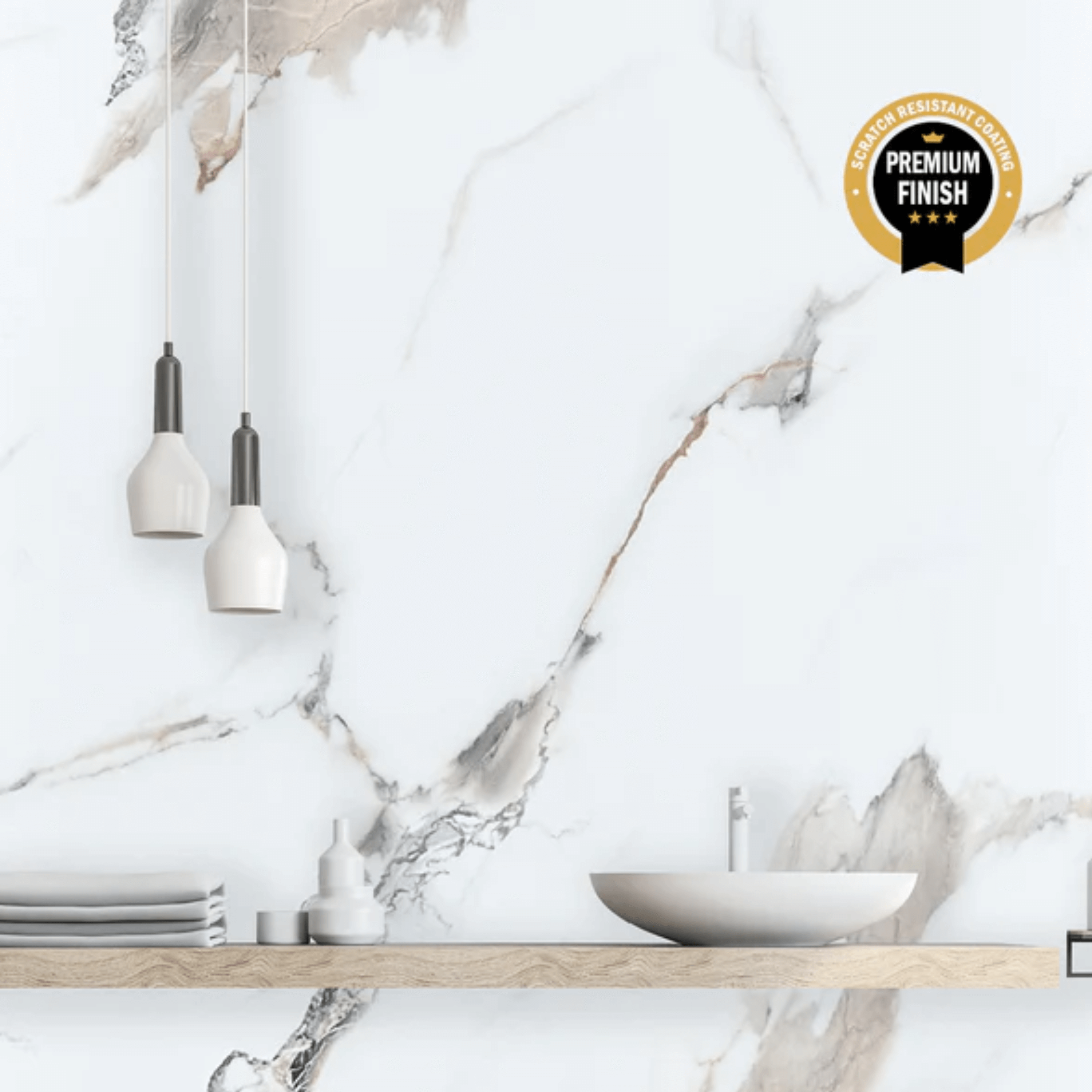
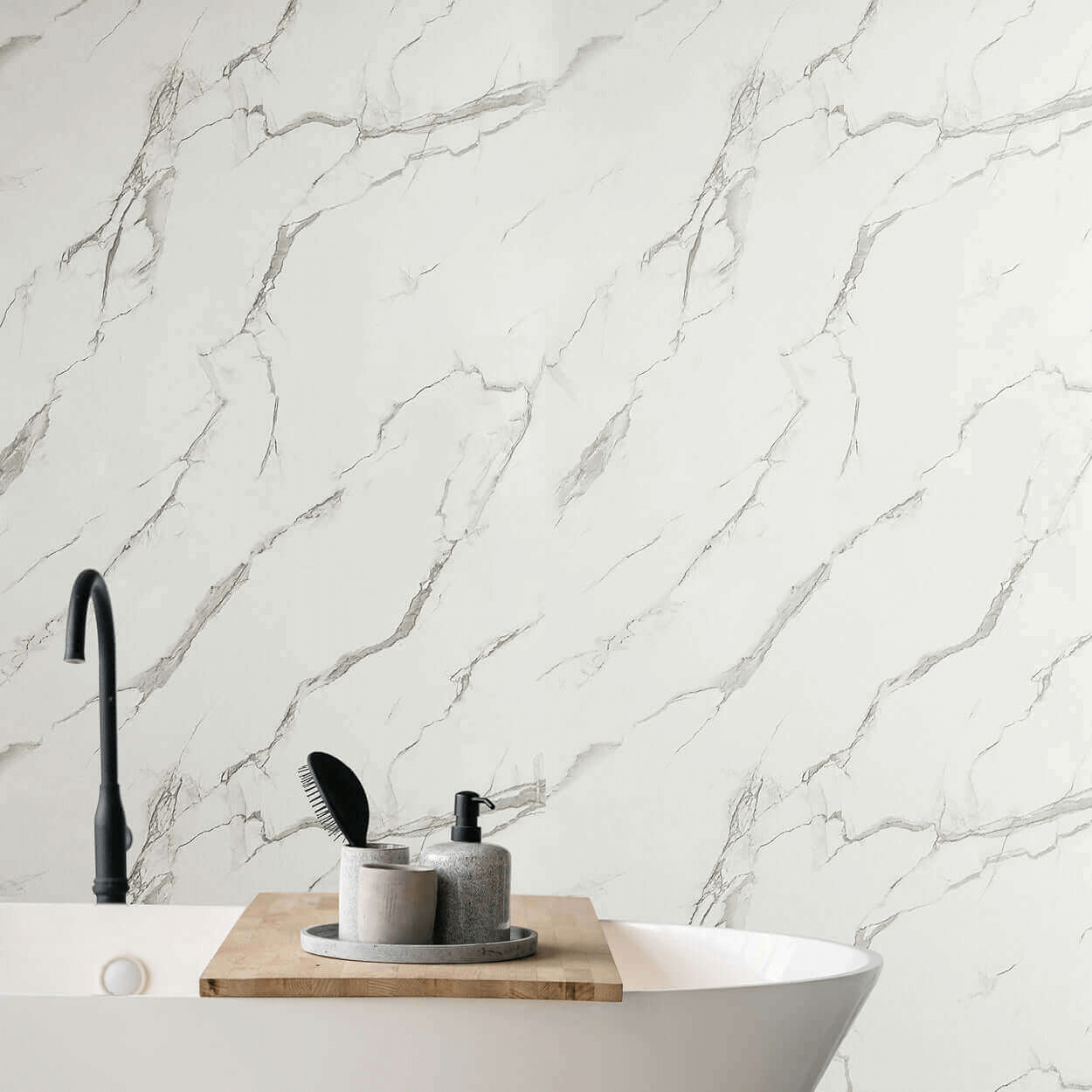
White and grey marble effects work in a completely different way. Used behind a walk-in shower with black fittings, they create a clean focal point without needing to continue around every wall.
Shower-only panelling can be worth considering when:
- You want the shower to become a defined feature.
- Most of the remaining walls do not need changing.
- You want to combine panels with painted walls.
- You have chosen a bold pattern and would rather use it in a smaller area.
- You are updating one part of the bathroom rather than redesigning the whole room.
It is a simple way of letting one section of the bathroom lead the design.

2. Continue the panels around the bath and basin
The middle ground is often the most interesting.
Instead of limiting panels to the shower enclosure, you can continue them into other key areas of the bathroom. That might mean panelling around the bath, behind the basin or along one or two adjoining walls.
The result feels more connected than a single shower feature, without committing to the same finish on every wall. Several of the customer bathrooms we have received recently use this approach particularly well.
In one compact bathroom, dark tile-effect panels run around the bath and basin area while the upper walls remain white. The darker surface gives the room definition, but the lighter painted areas stop it from feeling too enclosed.
You can also use the same idea with marble finishes. Carrying the panel from the shower onto a neighbouring vanity or splashback wall makes the two areas feel intentionally linked.
This layout can be useful when the bath, shower and basin sit close together. Rather than treating each section separately, one repeated wall finish helps visually connect them.
Think of it as creating a panelled zone, rather than a single feature wall.

3. Panel the whole bathroom
At the other end of the scale is full-room panelling. Here, the wall finish becomes part of the architecture of the room rather than simply decorating one section.
Using full bathroom wall panels can create a strong sense of continuity, particularly when the same design travels behind the bath, basin, toilet and shower. Our recent customer photos show how different this can look depending on the panel chosen.
A soft grey marble effect creates a calm, consistent backdrop around the entire bathroom. White sanitaryware and darker furniture then provide the contrast. A warmer stone or marble effect creates a completely different atmosphere, particularly when paired with chrome or brushed metal fittings.
And full coverage does not necessarily mean the room needs to feel dramatic. With a lighter pattern, keeping the walls consistent can actually reduce the number of competing finishes in the room.
Full-room panelling may suit you if:
- You want one consistent wall finish throughout.
- Several areas of the bathroom are being renovated at the same time.
- You prefer a clean, coordinated scheme.
- Your bathroom has awkward wall sections that would look more intentional with one continuous finish.
- You want the panels themselves to form the main backdrop to the room.
The important part is choosing a design you are happy to see across a larger surface area.

Think about the room before deciding
The amount of panelling you use should follow the bathroom rather than the other way around. Start with the layout.
If the shower sits in its own alcove, keeping the panels within that space can create a natural feature. If the bath, basin and shower sit closely together, continuing the same wall finish across them can make the layout feel more connected.
In a larger bathroom, full coverage can give the room a stronger overall identity. In a smaller bathroom, either approach can work, but pattern and colour become particularly important.
You should also look at what is already staying. If you love the existing flooring, vanity or painted walls, there may be no reason to cover everything. The panels can simply become one part of the scheme.
If almost every surface is changing, a full-room approach becomes much easier to build into the design from the beginning.

Let the panel design influence the coverage
The more wall you cover, the more noticeable the pattern becomes.
That does not mean bold panels cannot be used across a whole bathroom. It simply means you need to think about balance.
Large marble veining can become a major design feature when repeated around several walls. Softer stone effects tend to create a quieter backdrop. Light finishes can keep a scheme feeling open, while darker panels create more contrast.
Finish matters too.
Gloss, matt and ultra matt surfaces interact with light differently, so it is worth considering both the pattern and the surface before deciding how much of it you want around the room.
If you are still comparing finishes, our Choosing the Right PVC Panel Finish: Gloss, Matt, or Ultra Matt? guide explains the differences in more detail.
So, how much should you panel?
Think about what you want the panels to do.
- If you want a focal point, keep them around the shower.
- If you want different parts of the bathroom to feel more connected, extend them around the bath or basin.
- And if you want one continuous finish to define the whole room, full bathroom wall panels can create that effect.
There is plenty of room between those options too. Your bathroom does not have to follow a fixed formula.
You can explore our Bathroom Wall & Shower Panels collection to compare marble, stone, tile-effect, concrete, sparkle and other finishes before deciding how far you want to take your design.